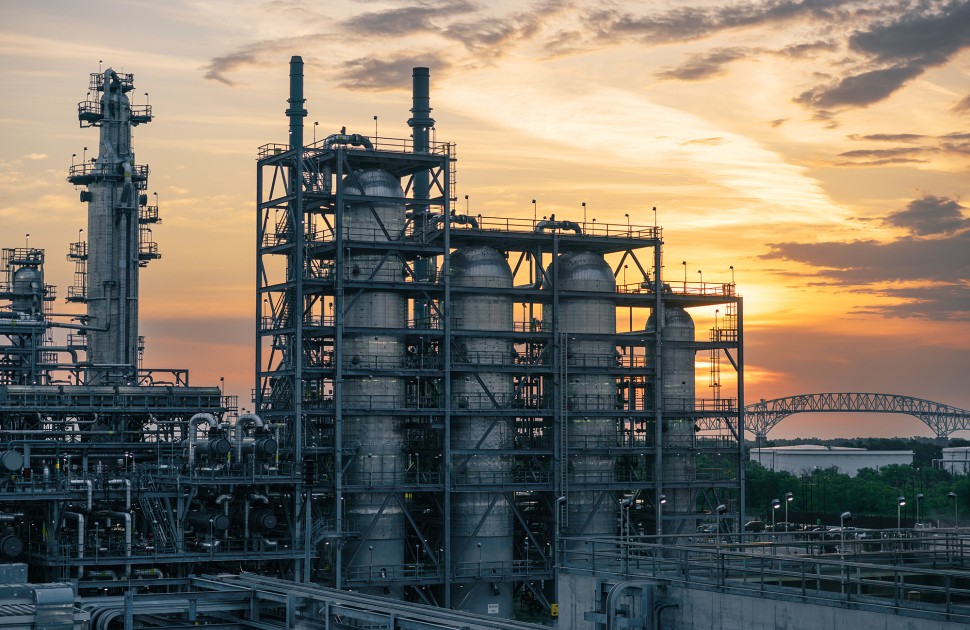
Valero Port Arthur Refinery: One of the Largest Refineries in the United States
The Valero Port Arthur Refinery is one of the largest and most complex petroleum refineries in the United States and in the world. Located in Port Arthur, Texas – in the heart of the Gulf Coast refining corridor that stretches from Corpus Christi to New Orleans – it has a crude oil processing capacity of approximately 310,000 barrels per day (bpd) and is capable of processing some of the world’s heaviest and most sulphur-rich crude oils into high-value refined products including gasoline, diesel, jet fuel and petrochemical feedstocks. Owned and operated by Valero Energy Corporation – the largest independent petroleum refiner in the United States – the Port Arthur refinery is a flagship asset in Valero’s 15-refinery North American portfolio and a critical component of the US Gulf Coast refining system.
This post covers the project facts, the refinery configuration, the processing technology, the construction and expansion methodology, the workforce, the environmental performance and the strategic significance of the Valero Port Arthur refinery in the context of the US refining industry.
Project Facts
| Item | Detail |
|---|---|
| Refinery name | Valero Port Arthur Refinery |
| Location | Port Arthur, Jefferson County, Texas, USA |
| Owner and operator | Valero Energy Corporation |
| Crude oil processing capacity | Approximately 310,000 barrels per day (bpd) |
| Refinery complexity | High – Nelson Complexity Index approximately 14–15 |
| Crude slate | Heavy sour crude oils – including Canadian oil sands, Mexican Maya, Venezuelan heavy crude |
| Primary products | Gasoline, ultra-low sulphur diesel (ULSD), jet fuel, petrochemical feedstocks, petroleum coke, sulphur |
| Site area | Approximately 2,400 acres (approximately 970 hectares) |
| Workforce | Approximately 3,800 employees and contractors |
| Original construction | 1902 – Gulf Refining Company |
| Acquired by Valero | 2005 – acquired from Premcor Inc. |
| Crude oil receipt | Deep-water marine terminal – capable of receiving Very Large Crude Carriers (VLCCs) |
| Pipeline connections | Multiple crude oil and product pipelines connecting to the US Gulf Coast pipeline network |
Port Arthur – The Refining Capital of the United States
Port Arthur, Texas, is one of the most important refining locations in the world. The city sits on the western shore of Sabine Lake, close to the Gulf of Mexico, in Jefferson County in southeast Texas. It is part of the Golden Triangle industrial region – the concentration of petrochemical and refining facilities centred on Beaumont, Port Arthur and Orange, Texas – that is one of the most significant industrial zones in the United States.
Port Arthur’s refining history began in 1901, when the Spindletop oil field – located just north of Beaumont – blew out in one of the most dramatic oil discoveries in history. The Spindletop gusher produced more oil in a single day than all the other oil wells in the United States combined at that time. Within months, refineries were being built in Port Arthur to process the flood of crude oil from Spindletop, and the city’s identity as a refining centre was established.
Today, Port Arthur is home to three of the largest refineries in the United States – the Valero Port Arthur Refinery, the Saudi Aramco/Shell Motiva Port Arthur Refinery (the largest refinery in the US at approximately 630,000 bpd) and the TotalEnergies Port Arthur Refinery. The combined crude oil processing capacity of these three refineries is approximately 1.1 million barrels per day – making Port Arthur the single largest refining location in the United States by crude oil processing capacity.
The location of Port Arthur’s refineries reflects the same factors that drove the original development of the refining industry there more than a century ago:
- Deep-water port access – the Sabine-Neches Waterway provides deep-water access to the Gulf of Mexico, allowing Very Large Crude Carriers (VLCCs) to deliver crude oil directly to the refinery marine terminals
- Pipeline connectivity – Port Arthur is connected to the US Gulf Coast pipeline network, providing access to crude oil from Texas, Louisiana, the Gulf of Mexico offshore fields and, through the Keystone and other pipelines, from the Canadian oil sands
- Proximity to petrochemical industry – the concentration of petrochemical plants in the Golden Triangle region provides a ready market for the refinery’s petrochemical feedstock products
- Skilled workforce – the long history of refining in Port Arthur has created a deep pool of skilled refinery workers, engineers and maintenance technicians
- Flat coastal terrain – the flat coastal terrain of southeast Texas simplified the civil engineering requirements for large-scale industrial development
Valero Energy Corporation
Valero Energy Corporation is the largest independent petroleum refiner in the United States and one of the largest refiners in the world. Headquartered in San Antonio, Texas, Valero operates 15 refineries in the United States, Canada and the United Kingdom, with a combined crude oil processing capacity of approximately 3.2 million barrels per day. Valero’s refineries are concentrated on the US Gulf Coast – the most competitive refining region in the world – with additional assets in the US Midwest, the US West Coast, Canada and the UK.
Valero was founded in 1980 as a natural gas pipeline company and entered the refining business in 1981 with the acquisition of the Corpus Christi refinery. The company grew rapidly through acquisitions in the 1990s and 2000s, acquiring refineries from major oil companies that were divesting their downstream assets as part of a strategic shift toward upstream exploration and production. The acquisition of Premcor Inc. in 2005 – which included the Port Arthur refinery – was one of the largest refinery acquisitions in US history and transformed Valero into the dominant player in US Gulf Coast refining.
Valero’s business model is built around the processing of heavy sour crude oils – the cheapest and most abundant crude oils in the world – into high-value refined products. Heavy sour crudes are more difficult to refine than light sweet crudes because they contain more sulphur, more heavy residual fractions and more contaminants. Refining them requires more complex and capital-intensive processing units – hydrotreaters, cokers, fluid catalytic crackers – than refining light sweet crudes. Valero has invested heavily in this complexity, and the Port Arthur refinery is one of the most complex refineries in its portfolio.
The Refinery Configuration
The Valero Port Arthur Refinery is a highly complex, fully integrated refinery capable of processing heavy sour crude oils into a full range of refined products. The refinery’s configuration – the combination of processing units it contains – determines what crude oils it can process and what products it can produce. The Port Arthur refinery’s high Nelson Complexity Index of approximately 14–15 reflects the extensive secondary and tertiary processing capability that allows it to convert the heavy, sulphur-rich fractions of heavy sour crude oils into high-value light products.
Crude Distillation
The crude distillation unit (CDU) is the first processing step in any refinery. Crude oil is heated in a furnace and fed to an atmospheric distillation column, where it is separated into fractions based on their boiling points – light gases, naphtha, kerosene, diesel and atmospheric residue. The atmospheric residue – the heaviest fraction that does not vaporise in the atmospheric column – is fed to a vacuum distillation unit (VDU), where it is further separated under reduced pressure into vacuum gas oil and vacuum residue.
The Port Arthur refinery’s crude distillation capacity of approximately 310,000 bpd is served by a deep-water marine terminal on the Sabine-Neches Waterway that can receive Very Large Crude Carriers (VLCCs) – the largest crude oil tankers in the world, with a capacity of approximately 2 million barrels. The ability to receive VLCCs gives the Port Arthur refinery access to the full range of internationally traded crude oils, including the heavy sour crudes from Canada, Mexico, Venezuela and the Middle East that are the refinery’s preferred feedstocks.
Fluid Catalytic Cracking (FCC)
The fluid catalytic cracking (FCC) unit is the workhorse of the complex refinery. It converts the heavy vacuum gas oil fraction – which has limited value as a fuel product – into lighter, more valuable products including gasoline, diesel and petrochemical feedstocks (propylene, butylene). The FCC process uses a hot, powdered catalyst to crack the large hydrocarbon molecules in the vacuum gas oil into smaller molecules at high temperature. The cracked products are separated in a fractionator and the catalyst is regenerated by burning off the coke that deposits on it during the cracking reaction.
The Port Arthur refinery’s FCC unit is one of the largest in the US Gulf Coast refining system. It is a critical component of the refinery’s ability to convert heavy crude oils into high-value light products and is a major contributor to the refinery’s gasoline and diesel production.
Delayed Coking
The delayed coking unit processes the vacuum residue – the heaviest fraction from the vacuum distillation unit – into lighter products and petroleum coke. In the delayed coking process, the vacuum residue is heated to high temperature in a furnace and fed to large coke drums, where the thermal cracking reaction converts the heavy hydrocarbons into lighter products (coker naphtha, coker gas oil) and solid petroleum coke. The coke drums are operated in pairs – while one drum is filling with coke, the other is being cut (the coke is removed using high-pressure water jets) and prepared for the next cycle.
Petroleum coke – the solid carbon product of the delayed coking process – is a significant by-product of the Port Arthur refinery’s heavy crude processing operations. It is used as a fuel in cement kilns and power plants, as a carbon source in aluminium smelting and as a feedstock for graphite electrode manufacture. The production of petroleum coke allows the refinery to convert the least valuable fraction of the heavy crude oil barrel – the vacuum residue – into a saleable product rather than a waste stream.
Hydrocracking
The hydrocracking unit converts vacuum gas oil and other heavy distillate fractions into high-quality diesel and jet fuel by reacting them with hydrogen at high pressure and temperature over a catalyst. Hydrocracking produces a higher yield of diesel and jet fuel than FCC and produces products of higher quality – lower sulphur content, better cold flow properties, higher cetane number. The Port Arthur refinery’s hydrocracking capability is a key component of its ability to produce ultra-low sulphur diesel (ULSD) – the standard diesel fuel specification in the United States since 2006.
Hydrotreating
Hydrotreating units remove sulphur, nitrogen and other contaminants from refinery streams by reacting them with hydrogen over a catalyst. The Port Arthur refinery operates multiple hydrotreating units covering naphtha, kerosene, diesel and other product streams. Hydrotreating is essential for meeting the sulphur specifications of modern fuel standards – the US EPA’s Tier 3 gasoline sulphur standard of 10 parts per million (ppm) and the ULSD standard of 15 ppm sulphur require extensive hydrotreating of the refinery’s gasoline and diesel streams.
Sulphur Recovery
The processing of heavy sour crude oils produces large quantities of hydrogen sulphide (H₂S) – a toxic gas that must be removed from the refinery’s process streams and converted into elemental sulphur for sale or disposal. The Port Arthur refinery’s sulphur recovery units use the Claus process to convert H₂S into elemental sulphur, which is sold as a commodity product used in the manufacture of sulphuric acid, fertilisers and other chemicals. The sulphur recovery units are a critical environmental control system – without them, the H₂S produced by the refinery’s hydroprocessing units would be released to the atmosphere as sulphur dioxide (SO₂), a major air pollutant.
Alkylation
The alkylation unit converts light olefins – propylene and butylene produced by the FCC unit – into alkylate, a high-octane, low-sulphur gasoline blending component. Alkylate is one of the most valuable gasoline blending components because of its high octane number, low vapour pressure and low sulphur content. The Port Arthur refinery’s alkylation unit uses hydrofluoric acid (HF) as the catalyst – a technology that requires stringent safety management because of the extreme toxicity of HF.
The Construction and Expansion Methodology
The Valero Port Arthur Refinery has been continuously developed, expanded and upgraded since its original construction in 1902. The construction methodology has evolved dramatically over more than a century – from the relatively simple construction techniques of the early 20th century to the highly sophisticated engineering, procurement and construction (EPC) methodologies of the modern refinery industry.
Original Construction – 1902
The Port Arthur refinery was originally built in 1902 by the Gulf Refining Company – a subsidiary of the Gulf Oil Corporation – to process crude oil from the Spindletop field. The original refinery was a simple atmospheric distillation facility, producing kerosene for lighting and lubricating oils. The construction methodology of the early 20th century refinery was labour-intensive and relatively unsophisticated by modern standards – the equipment was simpler, the safety standards were lower and the environmental requirements were minimal.
The original refinery site on the Sabine-Neches Waterway provided the deep-water access required to receive crude oil by tanker and to ship refined products to markets along the US Gulf Coast and beyond. This waterway access has remained a defining characteristic of the Port Arthur refinery throughout its history and is one of the primary reasons why the site has continued to be developed and expanded rather than replaced by a new greenfield refinery at a different location.
Post-War Expansion – 1940s to 1970s
The Port Arthur refinery underwent major expansion in the post-World War II period, as the growth of the US automobile industry drove rapidly increasing demand for gasoline. The expansion programme added fluid catalytic cracking capacity, alkylation units, reforming units and other secondary processing capability that transformed the refinery from a simple distillation facility into a complex, integrated refinery capable of producing the full range of modern transportation fuels.
The construction methodology of this era was characterised by the use of large, field-fabricated process vessels and heat exchangers, erected on-site using large crawler cranes. The process vessels – distillation columns, reactors, drums – were fabricated from carbon steel plate at specialist fabrication shops and transported to the site by road or barge. The installation of large process vessels required careful planning of the lift sequence, the crane positioning and the rigging arrangement to ensure that the vessels could be lifted and set on their foundations safely and within the crane’s rated capacity.
Modern Expansion and Upgrade Projects
Since Valero’s acquisition of the Port Arthur refinery in 2005, the company has invested billions of dollars in expansion and upgrade projects that have increased the refinery’s crude oil processing capacity, improved its product quality and reduced its environmental impact. The most significant of these projects include:
- Crude unit expansion – increasing the crude oil processing capacity from approximately 255,000 bpd at the time of acquisition to approximately 310,000 bpd through the debottlenecking of the crude distillation units and the expansion of the crude oil receiving and storage infrastructure
- Coker expansion – adding delayed coking capacity to increase the refinery’s ability to process heavy sour crude oils and convert the vacuum residue into lighter products and petroleum coke
- Hydroprocessing expansion – adding hydrotreating and hydrocracking capacity to meet the increasingly stringent sulphur specifications of US fuel standards and to increase the production of ultra-low sulphur diesel
- FCC upgrade – upgrading the fluid catalytic cracking unit to improve gasoline yield and quality and to increase propylene production for the petrochemical market
- Environmental control upgrades – installing flue gas desulphurisation (FGD) systems, selective catalytic reduction (SCR) systems and other environmental control equipment to reduce SO₂, NOx and particulate emissions from the refinery’s process heaters and boilers
Modular Construction and Pre-Fabrication
Modern refinery construction at Port Arthur makes extensive use of modular construction and pre-fabrication techniques to reduce the time and cost of construction and to improve the quality of the finished product. Process modules – pre-assembled packages of equipment, piping, structural steel and instrumentation – are fabricated at specialist module fabrication yards, typically in locations with lower labour costs than the Gulf Coast, and transported to the refinery site by barge or heavy transport vehicle for installation.
The use of modular construction reduces the amount of work that must be performed on the refinery site – where labour costs are high, working conditions are challenging and the interface with the operating refinery creates safety and productivity constraints. By moving as much work as possible to the fabrication yard, the construction programme can be compressed and the quality of the work improved, because the fabrication yard environment is more controlled and more productive than the refinery site.
Turnaround and Maintenance Methodology
In addition to capital expansion projects, the Port Arthur refinery undergoes regular planned maintenance turnarounds – periods of planned shutdown during which the refinery’s process units are taken offline for inspection, maintenance and repair. Turnarounds are among the most complex and demanding construction and maintenance activities in the refining industry. A major turnaround at a large refinery like Port Arthur can involve thousands of workers, hundreds of contractors and millions of man-hours of work, all compressed into a period of typically 30–60 days.
The turnaround methodology at Port Arthur is based on detailed planning that begins 18–24 months before the turnaround start date. Every task to be performed during the turnaround is identified, scoped, estimated and scheduled. The critical path – the sequence of tasks that determines the minimum duration of the turnaround – is identified and resourced to ensure that it is not delayed. The turnaround workforce – which can number 5,000–8,000 workers at peak – is mobilised, inducted and deployed in a carefully planned sequence to maximise productivity and minimise the duration of the shutdown.
Hurricane Resilience and Disaster Recovery
Port Arthur is located in one of the most hurricane-prone regions of the United States. The city has been directly impacted by multiple major hurricanes, including Hurricane Rita in 2005 and Hurricane Harvey in 2017. The Valero Port Arthur Refinery has developed robust hurricane preparedness and disaster recovery procedures to minimise the impact of hurricanes on its operations and to restore production as quickly as possible after a storm.
Hurricane Harvey – 2017
Hurricane Harvey made landfall near Rockport, Texas, on 25 August 2017 as a Category 4 hurricane and then stalled over southeast Texas for several days, producing catastrophic rainfall – up to 60 inches in some locations – that caused widespread flooding across the Houston-Beaumont-Port Arthur region. The flooding caused by Harvey was the most significant flood event in US history, with total damages estimated at approximately US$125 billion.
The Valero Port Arthur Refinery was directly impacted by Harvey’s flooding. The refinery was shut down as floodwaters inundated the site, and the recovery and restart process took several weeks. The refinery’s shutdown – along with the shutdowns of other Gulf Coast refineries affected by Harvey – caused a significant disruption to US gasoline and diesel supply, contributing to a spike in fuel prices across the country.
The Harvey experience accelerated Valero’s investment in flood protection infrastructure at the Port Arthur refinery, including the construction of flood barriers, the elevation of critical electrical equipment and the improvement of site drainage systems. These investments are designed to reduce the vulnerability of the refinery to future flood events and to enable a faster recovery if flooding does occur.
Hurricane Rita – 2005
Hurricane Rita struck the Port Arthur area in September 2005 – just weeks after Valero completed its acquisition of the refinery from Premcor. Rita caused significant damage to the refinery’s infrastructure, requiring an extensive repair and recovery programme before the refinery could return to full operation. The Rita experience provided Valero with an early and costly lesson in the hurricane vulnerability of the Port Arthur site and drove the development of the company’s Gulf Coast hurricane preparedness programme.
Environmental Performance and Compliance
The Valero Port Arthur Refinery operates under a comprehensive environmental permit issued by the Texas Commission on Environmental Quality (TCEQ) and is subject to the requirements of the US Environmental Protection Agency (EPA) under the Clean Air Act, the Clean Water Act and other federal environmental statutes. The refinery’s environmental performance is monitored continuously by TCEQ and EPA, and Valero is required to report its emissions and discharges to the regulatory authorities on a regular basis.
Air Emissions
The refinery’s primary air pollutants are sulphur dioxide (SO₂), nitrogen oxides (NOx), particulate matter (PM), volatile organic compounds (VOCs) and carbon monoxide (CO). The refinery’s sulphur recovery units – which convert hydrogen sulphide from the hydroprocessing units into elemental sulphur – are the primary control technology for SO₂ emissions. The refinery’s process heaters and boilers are equipped with low-NOx burners and, in some cases, selective catalytic reduction (SCR) systems to reduce NOx emissions. The FCC unit’s regenerator – which burns off the coke deposited on the catalyst during the cracking reaction – is equipped with a flue gas scrubber to reduce SO₂ and particulate emissions.
Valero has invested significantly in reducing the Port Arthur refinery’s air emissions since its acquisition in 2005. The company’s environmental investment programme has included the installation of new sulphur recovery capacity, the upgrade of existing sulphur recovery units to improve their efficiency, the installation of low-NOx burners on process heaters and the implementation of a comprehensive leak detection and repair (LDAR) programme to reduce VOC emissions from valves, flanges and other equipment.
Water Discharges
The refinery’s process water – water that has been in contact with hydrocarbons during the refining process – is treated in the refinery’s wastewater treatment plant before being discharged to the Sabine-Neches Waterway under the terms of the refinery’s National Pollutant Discharge Elimination System (NPDES) permit. The wastewater treatment plant uses a combination of physical, chemical and biological treatment processes to remove hydrocarbons, suspended solids, ammonia and other contaminants from the process water before discharge.
Greenhouse Gas Emissions
The Valero Port Arthur Refinery is one of the largest industrial sources of greenhouse gas emissions in Texas. The refinery’s CO₂ emissions are primarily associated with the combustion of fuel gas in the process heaters and boilers, the FCC unit regenerator and the coker furnaces. Valero has committed to reducing its greenhouse gas emissions as part of its corporate sustainability programme and has identified carbon capture and storage (CCS) as a potential technology for achieving significant CO₂ reductions at its Gulf Coast refineries.
The Workforce and Community
The Valero Port Arthur Refinery employs approximately 3,800 people – a combination of Valero employees and contractor personnel. The refinery is one of the largest private sector employers in Jefferson County and a major contributor to the local economy. The average salary of a refinery worker in Port Arthur is significantly above the county average, and the refinery’s payroll has a substantial multiplier effect on the local economy through spending on housing, retail, services and other sectors.
Valero is a significant contributor to the Port Arthur community through its charitable giving programme, the Valero Energy Foundation. The foundation supports education, community development and social services programmes in the communities where Valero operates, including Port Arthur. Valero’s annual Texas Open golf tournament – one of the PGA Tour’s most popular events – raises tens of millions of dollars for charities in San Antonio and across Texas each year.
The refinery’s workforce includes a high proportion of skilled tradespeople – pipefitters, welders, electricians, instrument technicians, millwrights and operators – whose skills are in high demand across the Gulf Coast refining and petrochemical industry. The Port Arthur area’s long history of refining has created a deep pool of these skills, and the local community colleges and technical schools provide training programmes that supply the refinery with a pipeline of qualified workers.
Valero Port Arthur and the US Refining System
The Valero Port Arthur Refinery is a critical component of the US refining system. At 310,000 bpd, it is one of the ten largest refineries in the United States and one of the most complex. Its ability to process heavy sour crude oils – the cheapest and most abundant crude oils in the world – into high-value light products makes it one of the most economically competitive refineries in the US system.
The refinery’s location on the Gulf Coast – with deep-water access to international crude oil markets and pipeline connectivity to the US domestic crude oil supply system – gives it access to the full range of crude oil feedstocks available in the global market. This feedstock flexibility is a significant competitive advantage, allowing the refinery to optimise its crude slate based on the relative prices of different crude oils and the demand for different refined products.
The Port Arthur refinery’s production of gasoline, diesel and jet fuel supplies markets across the US Gulf Coast, the US Southeast and, through export terminals, international markets. The refinery’s petrochemical feedstock production – propylene, butylene and other light olefins from the FCC unit – supplies the Gulf Coast petrochemical industry, which uses these feedstocks to manufacture plastics, synthetic rubber and other chemical products.
Summary
The Valero Port Arthur Refinery is one of the largest, most complex and most strategically important petroleum refineries in the United States. Located in Port Arthur, Texas – the refining capital of the United States – it has a crude oil processing capacity of approximately 310,000 barrels per day and a Nelson Complexity Index of approximately 14–15, reflecting its extensive secondary and tertiary processing capability. Owned and operated by Valero Energy Corporation since 2005, it processes heavy sour crude oils from Canada, Mexico, Venezuela and the Middle East into gasoline, ultra-low sulphur diesel, jet fuel, petrochemical feedstocks and petroleum coke. Originally built in 1902 by the Gulf Refining Company, it has been continuously developed, expanded and upgraded over more than a century to remain one of the most competitive refineries in the US Gulf Coast refining system. The key facts are:
- Location – Port Arthur, Jefferson County, Texas – Gulf Coast refining corridor
- Owner and operator – Valero Energy Corporation – largest independent petroleum refiner in the US
- Crude oil processing capacity – approximately 310,000 bpd
- Nelson Complexity Index – approximately 14–15 – one of the most complex refineries in the US
- Crude slate – heavy sour crude oils – Canadian oil sands, Mexican Maya, Venezuelan heavy crude
- Primary products – gasoline, ULSD, jet fuel, petrochemical feedstocks, petroleum coke, sulphur
- Site area – approximately 2,400 acres (970 hectares)
- Workforce – approximately 3,800 employees and contractors
- Original construction – 1902 – Gulf Refining Company
- Acquired by Valero – 2005 – from Premcor Inc.
- Deep-water marine terminal – capable of receiving Very Large Crude Carriers (VLCCs)
- Part of the Port Arthur refining complex alongside Motiva (630,000 bpd) and TotalEnergies
- Impacted by Hurricane Rita (2005) and Hurricane Harvey (2017) – significant investment in flood resilience
Interested in Refinery Construction Methodology or Turnaround Planning?
We work with contractors, owners and project teams on construction methodology, programme development and Efficient Construction Cost (ECC) modelling for petroleum refinery construction, expansion and turnaround projects. Our approach starts with the construction methodology – and builds the programme and cost model from there.
Use the form below to discuss your project.
Our Partners
- FR2 Infrastructure – Constructability advise and project and planning controls
- Staging Diagrams – Staging diagrams for possession planning
✨ Support Our Mission ✨
Help us continue building tools that simplify complexity!


Every contribution fuels new features and improvements
Thank you for being part of our journey! 🚀
Contact Us
Discover more from Construction Methodology
Subscribe to get the latest posts sent to your email.
Discover more from Construction Methodology
Subscribe to get the latest posts sent to your email.