Khorramabad Gas Power Plant: 324 MW in the Heart of Lorestan Province
The Khorramabad Power Plant is a gas-fired power generation facility located in Khorramabad, the capital of Lorestan Province in western Iran. With an installed capacity of 324 MW, it has been supplying electricity to the regional grid since its commissioning in 2011. Owned and operated by Iran Power Generation and Transmission Company (TAVANIR), it is one of the key generation assets in Iran’s western grid and a representative example of the gas turbine power plants that form the backbone of Iran’s electricity generation infrastructure.
This post covers the project facts, the technology, the construction methodology, the ownership structure and the significance of the Khorramabad plant in the context of Iran’s energy sector.
Project Facts
| Item | Detail |
|---|---|
| Plant name | Khorramabad Power Plant (نیروگاه خرمآباد) |
| Location | Khorramabad, Lorestan Province, Iran |
| Coordinates | 33.3736° N, 48.4036° E |
| Installed capacity | 324 MW |
| Technology | Gas turbine (open cycle) |
| Primary fuel | Natural gas |
| Commissioning year | 2011 |
| Plant age (as of 2026) | 15 years |
| Owner and operator | Iran Power Generation and Transmission Company (TAVANIR) |
| Grid connection | Iran national electricity grid – western region |
The Location – Khorramabad and Lorestan Province
Khorramabad is the capital of Lorestan Province in the Zagros Mountains of western Iran. It is one of the oldest continuously inhabited cities in Iran, with a history stretching back more than 3,000 years. The city sits in a narrow valley carved by the Khorramabad River at an elevation of approximately 1,125 metres above sea level, surrounded by the rugged peaks of the Zagros range. The population of Khorramabad is approximately 375,000, with the broader Lorestan Province home to approximately 1.8 million people.
The location of the power plant at coordinates 33.3736° N, 48.4036° E places it in the eastern outskirts of Khorramabad, where the terrain opens up sufficiently to accommodate the plant’s footprint and where access to the gas transmission network and the high-voltage electricity grid is practical. The mountainous terrain of Lorestan Province presents specific challenges for power plant construction and operation – access roads, foundation conditions in rocky terrain, seismic considerations in the Zagros fold-and-thrust belt and the management of construction logistics in a region where the road network is constrained by the topography.
Lorestan Province is one of the less industrially developed provinces of Iran, and the reliable electricity supply provided by the Khorramabad plant is a critical enabler of the region’s economic development. The plant supplies electricity to local industries, agricultural operations, commercial businesses and residential consumers across the province, supporting the livelihoods of the 1.8 million people who live there.
TAVANIR – Iran Power Generation and Transmission Company
The Khorramabad Power Plant is owned and operated by Iran Power Generation and Transmission Company, known by its Persian acronym TAVANIR (شرکت توانیر). TAVANIR is the state-owned holding company responsible for the generation, transmission and dispatch of electricity across Iran. It is one of the largest electricity utilities in the Middle East, overseeing a national generation portfolio of approximately 90,000 MW of installed capacity – making Iran one of the largest electricity producers in the region.
TAVANIR operates through a network of regional electricity generation companies and transmission companies that manage the day-to-day operation of Iran’s power plants and transmission infrastructure. The Khorramabad plant falls within the operational area of the regional generation company responsible for Lorestan Province and the western grid region.
Iran’s electricity sector has undergone significant restructuring since the 1990s, with TAVANIR progressively transferring ownership of generation assets to private and semi-private operators under Iran’s privatisation programme. However, TAVANIR retains ownership of a significant proportion of Iran’s generation capacity, including the Khorramabad plant, and continues to play a central role in the planning, development and operation of Iran’s electricity infrastructure.
The Technology – Gas Turbine Generation
Open Cycle Gas Turbine
The Khorramabad Power Plant uses gas turbine technology for power generation. At 324 MW, the plant is most likely configured as an open cycle gas turbine (OCGT) facility – a configuration in which natural gas is burned in gas turbine combustors, producing high-temperature combustion gases that drive the gas turbines and generators, with the exhaust gases discharged directly to the atmosphere rather than being used to generate additional steam for a steam turbine cycle.
Open cycle gas turbine plants have a lower thermal efficiency than combined cycle gas turbine (CCGT) plants – typically 35–40% compared to 55–60% for CCGT – but they have a lower capital cost, a shorter construction time and a simpler operational profile. They are well-suited to applications where the primary requirement is reliable, dispatchable generation capacity that can be brought online quickly to meet peak demand or to provide grid stability services.
In Iran’s electricity system, open cycle gas turbine plants play an important role in meeting peak demand during the summer months, when air conditioning loads drive electricity demand to its annual maximum. The ability to start up quickly – typically within 10–15 minutes for a gas turbine, compared to several hours for a steam turbine – makes OCGT plants valuable for peak demand management and grid frequency regulation.
Natural Gas as Primary Fuel
The Khorramabad plant operates on natural gas as its primary fuel. Iran has the world’s second-largest proven natural gas reserves – approximately 32 trillion cubic metres – and natural gas is the dominant fuel for electricity generation in the country. Iran’s gas transmission network extends across the country, including to the western provinces, providing a reliable gas supply to the Khorramabad plant.
Natural gas is a significantly cleaner fuel than coal or oil for power generation. It produces approximately 50% less CO₂ per unit of energy than coal and approximately 25% less than oil. Gas turbine power plants also produce lower levels of particulate matter, sulphur dioxide and nitrogen oxides than coal-fired plants, making them a more environmentally acceptable generation technology in regions where air quality is a concern.
Iran’s electricity generation mix is dominated by natural gas, which accounts for approximately 70% of total generation. The country’s abundant gas reserves make natural gas the logical primary fuel for power generation, and the development of gas-fired generation capacity – including plants like the Khorramabad facility – has been a central element of Iran’s electricity sector development strategy for the past three decades.
Advanced Gas Turbine Systems
The operational technology at the Khorramabad facility features advanced gas turbine systems that enable efficient energy generation, optimising the conversion of natural gas into electricity. Modern gas turbines used in Iranian power plants include units manufactured by domestic manufacturers – most notably MAPNA Group, Iran’s leading power plant equipment manufacturer – as well as older units from international manufacturers including Siemens, GE and Alstom that were installed before the imposition of international sanctions on Iran’s energy sector.
MAPNA Group has been a key enabler of Iran’s gas turbine programme. Established in 1993, MAPNA has developed the capability to manufacture gas turbines, steam turbines, generators and associated equipment domestically, reducing Iran’s dependence on imported power plant equipment. MAPNA’s gas turbines – including the MGT-70 series, which is based on the Siemens V94.2 design – are widely deployed across Iran’s gas turbine fleet and are likely to be represented in the Khorramabad plant’s equipment configuration.
The Construction Methodology
The construction of a 324 MW gas turbine power plant in the mountainous terrain of Lorestan Province presented specific methodology challenges that are distinct from those encountered in the flat coastal environments where most Gulf power plants are built. The Zagros Mountains terrain, the seismic environment, the altitude and the logistics of construction in a relatively remote provincial location all influenced the construction methodology for the Khorramabad plant.
Site Preparation and Civil Works
The civil works for a gas turbine power plant of this scale include the gas turbine and generator foundations, the auxiliary building structures, the fuel gas receiving and metering facilities, the electrical switchyard and the site infrastructure. The gas turbine foundations are among the most demanding civil structures in the plant – they must be designed and constructed to support the weight of the gas turbine and generator and to provide the vibration isolation required to protect the turbine from ground-borne vibration.
In the Zagros Mountains environment, the foundation design must also account for the seismic hazard. The Zagros fold-and-thrust belt is one of the most seismically active regions in Iran – the province of Lorestan has experienced numerous significant earthquakes, including the devastating 2003 Bam earthquake and the 2005 Lorestan earthquake. The gas turbine foundations and all safety-critical structures at the Khorramabad plant must be designed to withstand the seismic loads defined by Iran’s seismic design code (Standard 2800) for the site’s seismic zone classification.
The rocky terrain of the Khorramabad site required rock excavation for the foundations and underground services. Rock excavation is more expensive and time-consuming than soil excavation and requires specialist equipment – hydraulic breakers, rock drills and in some cases controlled blasting. The foundation design must account for the variability of the rock conditions across the site, which can range from competent rock requiring minimal treatment to fractured or weathered rock requiring grouting or other ground improvement measures.
Equipment Delivery and Installation
The delivery of major plant items – gas turbines, generators, transformers and other heavy equipment – to the Khorramabad site required careful logistics planning. The road network in Lorestan Province is constrained by the mountainous terrain, and the delivery of oversized loads requires route surveys, road strengthening works and careful coordination with the road authorities. The gas turbines and generators for the Khorramabad plant were most likely transported by road from the manufacturing facility – either MAPNA’s facility in Tehran or a port of entry – to the site on specialist heavy transport vehicles.
The installation of the gas turbines and generators required heavy lift cranes and precision alignment equipment. Gas turbines must be installed on their foundations to alignment tolerances of fractions of a millimetre to ensure that the rotating machinery operates without vibration and achieves its design performance. The installation of the gas turbines at Khorramabad was carried out by specialist erection teams with experience in gas turbine installation in challenging terrain conditions.
Mechanical and Electrical Installation
The mechanical and electrical installation at Khorramabad covered the fuel gas supply system, the gas turbine auxiliary systems, the generator and excitation systems, the step-up transformers, the high-voltage switchyard and the grid connection. The fuel gas supply system – which receives natural gas from the national gas transmission network, reduces the pressure to the turbine inlet pressure and meters the gas flow – must be installed and commissioned to ensure a reliable and accurately metered gas supply to the turbines.
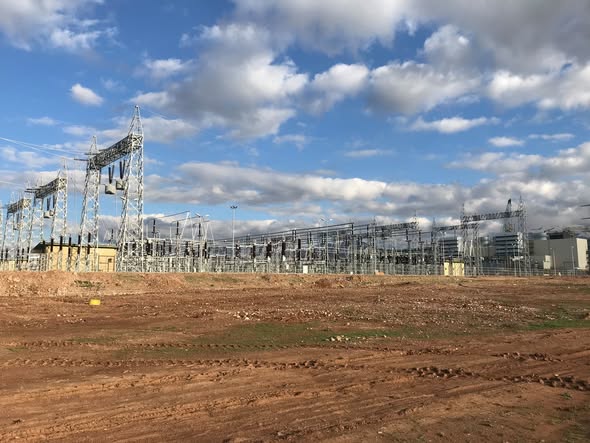
The high-voltage switchyard connects the plant’s generators to the national electricity grid. The switchyard must be designed and constructed to handle the full output of the plant and to provide the protection and switching capability required for safe and reliable grid connection. The grid connection at Khorramabad connects the plant to the western region of Iran’s national high-voltage transmission network, from which the electricity is distributed to consumers across Lorestan Province and the surrounding region.
Commissioning
Commissioning a gas turbine power plant involves a sequence of activities that begins with the completion of the civil and structural works and ends with the demonstration of the plant’s performance against the contractual performance guarantees. The commissioning process includes flushing and cleaning of the fuel gas system, functional testing of all mechanical and electrical systems, first fire of the gas turbines, first synchronisation of the generators to the grid and performance testing to demonstrate that the plant achieves its guaranteed output and efficiency at the specified fuel conditions and ambient temperature.
The altitude of the Khorramabad site – approximately 1,125 metres above sea level – affects the performance of the gas turbines. At altitude, the atmospheric pressure is lower than at sea level, reducing the density of the air entering the gas turbine compressor and therefore the mass flow through the turbine. This altitude derating reduces the power output of the gas turbines below their sea-level rated capacity. The commissioning performance tests must be conducted at the actual site conditions and the results corrected to the reference conditions specified in the performance guarantee to verify compliance.
Operational Considerations
Altitude and Ambient Temperature Effects
The Khorramabad plant operates at an altitude of approximately 1,125 metres above sea level and in a climate that is significantly cooler than the Gulf coastal environments where most Middle Eastern power plants are located. The cooler ambient temperatures at Khorramabad – particularly in winter, when temperatures can fall below freezing – actually benefit gas turbine performance compared to Gulf locations. Cooler, denser air increases the mass flow through the gas turbine compressor, increasing the power output above the ISO-rated capacity. This means that the Khorramabad plant can achieve higher output in winter than in summer, which is the opposite of the situation at Gulf coastal plants where summer heat significantly reduces output.
However, the cold winter temperatures also create operational challenges. Fuel gas systems must be protected against freezing. Instrumentation and control systems must be designed to operate reliably at low temperatures. The plant’s buildings and enclosures must be insulated and heated to maintain the temperature conditions required for the reliable operation of sensitive equipment.
Seismic Monitoring and Protection
The seismic environment of the Zagros Mountains requires that the Khorramabad plant be equipped with seismic monitoring instrumentation and that the plant’s protection systems include automatic shutdown procedures triggered by seismic events above a defined threshold. The seismic protection systems are designed to bring the plant to a safe shutdown condition in the event of a significant earthquake, preventing damage to the plant and ensuring the safety of the operating personnel.
Water Supply
Gas turbine power plants require water for cooling, for the demineralised water systems that supply the turbine inlet cooling and compressor washing systems, and for the fire protection systems. The Khorramabad River – which flows through the city – provides a water source for the plant’s water supply systems. The water must be treated before use in the plant’s systems to remove suspended solids, dissolved minerals and biological contaminants that could damage the turbines or the water treatment equipment.
Iran’s Electricity Sector – Context
Iran has one of the largest electricity generation systems in the Middle East, with a total installed capacity of approximately 90,000 MW. The country’s electricity demand has grown rapidly over the past three decades, driven by population growth, industrialisation and the expansion of energy-intensive industries including petrochemicals, steel and aluminium. Iran’s electricity generation mix is dominated by natural gas, which accounts for approximately 70% of total generation, with hydropower contributing approximately 15% and oil-fired generation and other sources making up the remainder.
Iran’s electricity sector faces significant challenges. The country’s electricity infrastructure – generation plants, transmission lines and distribution networks – requires substantial investment to maintain and expand. International sanctions have restricted Iran’s access to foreign technology, equipment and financing, making it more difficult to develop new generation capacity and to maintain and upgrade existing plants. TAVANIR and the Iranian government have responded to these challenges by developing domestic manufacturing capability – most notably through MAPNA Group – and by pursuing a programme of power plant construction and rehabilitation using domestically manufactured equipment.
The Khorramabad plant, commissioned in 2011, is a product of this domestic capability development programme. It represents Iran’s ability to design, construct and commission a 324 MW gas turbine power plant using predominantly domestic resources – engineering expertise, construction capability and, in many cases, domestically manufactured equipment.
The Plant’s Contribution to Regional Energy Security
The Khorramabad plant’s 324 MW of installed capacity makes a significant contribution to the electricity supply of Lorestan Province and the western region of Iran’s national grid. Lorestan Province has a peak electricity demand of approximately 800–1,000 MW during the summer months, when air conditioning loads drive demand to its annual maximum. The Khorramabad plant supplies a substantial proportion of this peak demand, reducing the province’s dependence on electricity imports from other regions of the national grid and improving the reliability of the electricity supply to local consumers.
The plant also contributes to the economic development of Lorestan Province by providing a stable power supply that supports local industries and communities. Lorestan Province has significant agricultural, industrial and mining activities – including the Khuzestan steel complex and various agricultural processing industries – that depend on reliable electricity supply. The Khorramabad plant’s contribution to the reliability of the regional electricity supply is a direct enabler of these economic activities.
Potential for Combined Cycle Conversion
One of the most significant opportunities for improving the efficiency and output of the Khorramabad plant is the conversion of the open cycle gas turbine plant to a combined cycle configuration. In a combined cycle conversion, heat recovery steam generators (HRSGs) are added to the exhaust of the existing gas turbines, and a steam turbine and generator are installed to generate additional electricity from the waste heat in the gas turbine exhaust. This conversion can increase the plant’s output by approximately 50% and improve its thermal efficiency from approximately 35–40% to approximately 55–60%, without requiring additional fuel.
Combined cycle conversion is a well-established technology that has been widely applied to open cycle gas turbine plants across Iran and the broader Middle East. TAVANIR has a programme of combined cycle conversions across its gas turbine fleet, and the Khorramabad plant may be a candidate for such a conversion as part of TAVANIR’s ongoing efforts to improve the efficiency of Iran’s generation fleet and reduce the carbon intensity of electricity production.
A combined cycle conversion at Khorramabad would increase the plant’s output from 324 MW to approximately 480–500 MW, improve its thermal efficiency by approximately 20 percentage points and reduce its CO₂ emissions per unit of electricity generated by approximately 30%. These improvements would enhance the plant’s contribution to Lorestan Province’s electricity supply and reduce the environmental impact of its operation.
Summary
The Khorramabad Power Plant is a 324 MW gas turbine power generation facility located in the capital of Lorestan Province in western Iran. Commissioned in 2011 and owned and operated by TAVANIR, it has been supplying electricity to the regional grid for 15 years, supporting the economic development of Lorestan Province and contributing to the energy security of Iran’s western grid region. Operating on natural gas in the mountainous terrain of the Zagros Mountains at an altitude of approximately 1,125 metres above sea level, it presents construction and operational challenges that are distinct from those of the Gulf coastal power plants that dominate the regional energy landscape. The key facts are:
- Location – Khorramabad, Lorestan Province, western Iran – 33.3736° N, 48.4036° E
- Installed capacity – 324 MW
- Technology – gas turbine (open cycle)
- Primary fuel – natural gas
- Commissioned – 2011 – 15 years in operation as of 2026
- Owner and operator – TAVANIR (Iran Power Generation and Transmission Company)
- Grid connection – Iran national electricity grid, western region
- Altitude – approximately 1,125 metres above sea level – affects gas turbine performance and construction methodology
- Seismic environment – Zagros fold-and-thrust belt – seismic design to Iranian Standard 2800
- Population served – approximately 1.8 million people in Lorestan Province
- Potential for combined cycle conversion – could increase output to approximately 480–500 MW and improve thermal efficiency from 35–40% to 55–60%
Interested in Gas Power Plant Construction Methodology or Combined Cycle Conversion?
We work with contractors, owners and project teams on construction methodology, programme development and Efficient Construction Cost (ECC) modelling for gas power generation, combined cycle conversion and energy infrastructure projects. Our approach starts with the construction methodology – and builds the programme and cost model from there.
Use the form below to discuss your project.
The content on PossessionPlanning.com is for informational purposes only. We make no guarantees regarding completeness or reliability. PossessionPlanning.com is an independent platform, not affiliated with or endorsed by any
rail
operator or government agency. Read our
Terms of Use.
// RESOURCES & REFERENCES
// OUR PARTNERS & NETWORK
// SUPPORT OUR MISSION
✨ Help us continue building tools that simplify complexity!
Every contribution fuels new features and improvements.


Thank you for being part of our journey! 🚀
// CONTACT US
Discover more from Construction Methodology
Subscribe to get the latest posts sent to your email.
Discover more from Construction Methodology
Subscribe to get the latest posts sent to your email.