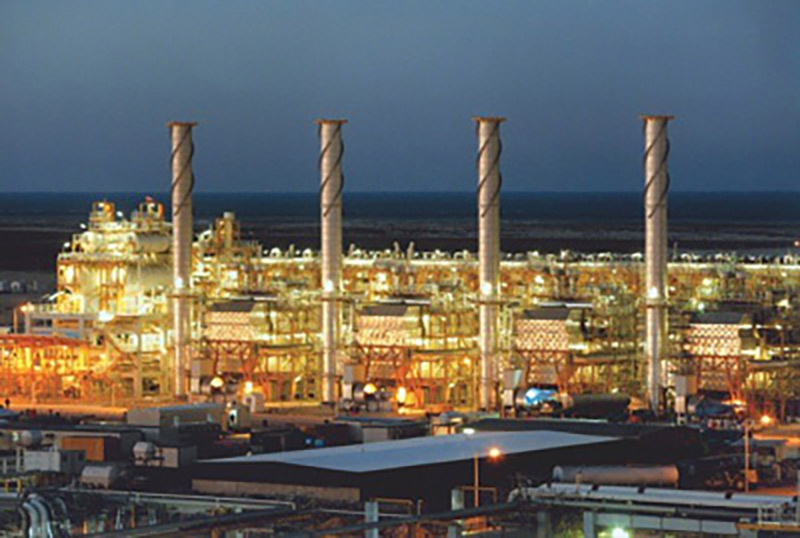
Ras Qirtas Power and Water Plant: Ras Laffan C – Qatar’s 2,730 MW Industrial City Powerhouse
The Ras Qirtas Power and Water Plant – known in the project finance and utility sector as Ras Laffan C – is one of the largest and most strategically important independent water and power projects (IWPPs) in Qatar. Located within Ras Laffan Industrial City on the northern coast of Qatar, approximately 80 kilometres north of Doha, it has a power generation capacity of 2,730 MW and a water desalination capacity of 63 million imperial gallons per day (MIGD). It supplies electricity and desalinated water to Ras Laffan Industrial City – the operational heart of Qatar’s liquefied natural gas (LNG) industry – and to Qatar’s national electricity and water grid through Kahramaa, Qatar General Electricity and Water Corporation.
This post covers the project facts, the technology, the construction methodology, the ownership and financial structure and the strategic significance of the Ras Qirtas plant in the context of Qatar’s energy and water infrastructure.
Project Facts
| Item | Detail |
|---|---|
| Project name | Ras Qirtas Power and Water Plant (Ras Laffan C) |
| Location | Ras Laffan Industrial City, northern Qatar – approximately 80 km north of Doha |
| Power generation capacity | 2,730 MW |
| Water desalination capacity | 63 MIGD (approximately 286,000 m³/day) |
| Technology – power | Combined cycle gas turbine (CCGT) |
| Technology – water | Multi-Stage Flash (MSF) desalination |
| Primary fuel | Natural gas – Qatar North Field |
| Offtaker | Qatar Electricity and Water Company (QEWC) / Kahramaa |
| Offtake contract | Power and Water Purchase Agreement (PWPA) – long term |
| Project structure | Independent Water and Power Project (IWPP) |
| Commercial operations date | 2011 |
| Key investors | Qatar Electricity and Water Company (QEWC), QatarEnergy, Mitsui and Co., Marubeni Corporation |
| Project cost | Approximately US$3.5–4 billion |
Ras Laffan Industrial City – The Strategic Context
Ras Laffan Industrial City was established in 1996 as the onshore processing and export hub for Qatar’s North Field – the world’s largest single natural gas reservoir, shared with Iran’s South Pars field. The North Field contains approximately 900 trillion cubic feet of recoverable natural gas. The development of Ras Laffan transformed Qatar’s economy from a small Gulf state into the world’s wealthiest country per capita in less than three decades.
Ras Laffan Industrial City covers approximately 106 square kilometres and is home to more than 14 LNG trains, the world’s largest gas-to-liquids plant (Pearl GTL, operated by Shell), major petrochemical complexes and a deep-water port capable of accommodating the world’s largest LNG carriers. The total electricity demand of the industrial city is in the range of 3,000–4,000 MW – comparable to the electricity demand of a medium-sized European city. Every megawatt of that demand must be reliably supplied, because the LNG trains and petrochemical plants that generate Qatar’s national wealth cannot tolerate power interruptions.
The Ras Qirtas plant – at 2,730 MW – is the largest single power generation facility within Ras Laffan Industrial City and the largest IWPP in Qatar. It is the primary power and water supply for the industrial city and a critical component of Qatar’s national electricity and water infrastructure.
Why Ras Laffan C Was Needed
The development of Ras Laffan C was driven by the rapid expansion of Qatar’s LNG production capacity in the 2000s. Qatar’s LNG production grew from approximately 10 million tonnes per year in 2000 to approximately 77 million tonnes per year by 2010 – a sevenfold increase in a decade. Each new LNG train added to Ras Laffan Industrial City increased the electricity demand of the city by 200–300 MW. The existing power generation capacity at Ras Laffan – provided by Ras Laffan A (756 MW, commissioned 2004) and Ras Laffan B (1,025 MW, commissioned 2008) – was insufficient to meet the growing demand.
Ras Laffan C was developed to provide the additional generation capacity required to support the final phase of Qatar’s LNG expansion programme and to ensure that the industrial city had sufficient power and water capacity to meet its needs through the 2010s and beyond. At 2,730 MW, Ras Laffan C is more than twice the size of Ras Laffan B and nearly four times the size of Ras Laffan A, reflecting the scale of the capacity gap that needed to be filled.
The Technology
Combined Cycle Gas Turbine (CCGT) Generation
The Ras Qirtas plant uses combined cycle gas turbine (CCGT) technology for power generation. CCGT is the most efficient and most widely deployed technology for large-scale natural gas power generation. In a CCGT plant, natural gas is burned in gas turbine combustors, producing high-temperature combustion gases that drive the gas turbines and generators. The hot exhaust gases from the gas turbines – typically at temperatures of 550–600°C – are directed to heat recovery steam generators (HRSGs), where they produce high-pressure steam. The steam drives steam turbines, which drive additional generators to produce more electricity. The combined thermal efficiency of the CCGT cycle is 55–60%, compared to 35–40% for a conventional open cycle gas turbine plant.
At 2,730 MW, the Ras Qirtas plant is one of the largest CCGT plants in the Middle East. The plant configuration is likely based on a multiple gas turbine and steam turbine arrangement – most probably a configuration of six to eight large gas turbines, each in the 300–400 MW class, with a corresponding number of HRSGs and three to four steam turbines in a combined cycle arrangement. This multi-unit configuration provides operational flexibility – individual gas turbine and steam turbine units can be taken offline for maintenance without losing the full plant output – and redundancy, ensuring that the plant can continue to supply power to the industrial city even when multiple units are unavailable.
Gas Turbine Technology in the Gulf Environment
Operating gas turbines at Ras Laffan presents the same challenges as all Gulf coastal power plants. Summer temperatures regularly exceed 45°C, reducing the density of the air entering the gas turbine compressor and therefore the power output. Gas turbine performance guarantees are stated at ISO conditions (15°C ambient temperature). In the Gulf summer, the actual output of a gas turbine can be 20–30% lower than its ISO-rated capacity. Inlet air cooling systems – evaporative coolers or mechanical chillers – are typically installed to mitigate this derating and maintain generation capacity during peak demand periods.
The high humidity and salt content of the Arabian Gulf air requires inlet air filtration systems and compressor washing systems to protect the gas turbine compressor blades from salt deposition and corrosion. These systems must be maintained to a high standard to protect the turbines and maintain their performance and availability over the long operational life of the plant.
Multi-Stage Flash (MSF) Desalination
The water desalination at Ras Qirtas uses Multi-Stage Flash (MSF) technology, co-located with the CCGT power generation to take advantage of the waste heat from the power generation process. The 63 MIGD desalination capacity – approximately 286,000 m³/day – is produced by a series of MSF desalination units that use steam extracted from the steam turbine cycle to heat the seawater feed.
In MSF desalination, seawater is heated using steam extracted from the steam turbine at an intermediate pressure and then passed through a series of chambers at progressively lower pressures. As the pressure drops in each stage, some of the seawater flashes to steam, which is condensed on heat exchanger tubes to produce fresh water. The process is repeated across multiple stages – typically 20–30 – to maximise the recovery of fresh water from the seawater feed. The brine reject from the last stage is returned to the sea through the outfall structure.
The thermal coupling of MSF desalination with CCGT power generation in a combined power and water plant is the standard model for large-scale water production in Qatar and across the Gulf. The waste heat from the power generation process – which would otherwise be rejected to the environment through the steam turbine condenser – is used productively in the desalination process, improving the overall efficiency of the combined plant and reducing the cost of water production.
The Construction Methodology
The construction of a 2,730 MW CCGT power plant and a 63 MIGD MSF desalination plant at Ras Laffan Industrial City was one of the largest and most complex construction programmes undertaken in Qatar. The construction methodology was driven by the scale of the project, the location within an active industrial city, the extreme Gulf climate and the requirement to deliver a world-class facility to the highest standards of quality and safety within a demanding programme.
Construction Within an Active Industrial City
One of the most significant construction methodology challenges at Ras Qirtas was the need to construct a major power and water plant within the boundaries of Ras Laffan Industrial City – an active, operating industrial complex containing LNG trains, petrochemical plants, a deep-water port and extensive utilities infrastructure. Construction activities that could affect the operation of the adjacent facilities – excavation near live pipelines and cables, heavy lifts over live plant, hot work near gas processing facilities, vehicle movements on shared roads – required careful planning, risk assessment and coordination with the industrial city management and the operators of the adjacent facilities.
The construction site at Ras Qirtas was subject to the safety management system of Ras Laffan Industrial City, which imposes stringent requirements on all contractors working within the city. All construction personnel required induction training before entering the city. All construction activities required permits to work. All vehicles required inspection and registration. The construction contractor’s safety management system had to be compatible with and integrated into the industrial city’s safety management system.
Site Preparation and Civil Works
The civil works at Ras Qirtas included the gas turbine and steam turbine foundations, the HRSG structures, the MSF desalination building structures, the cooling water intake and outfall structures, the fuel gas receiving and metering facilities, the electrical switchyard and the site infrastructure. The scale of the civil works programme was extraordinary – at 2,730 MW, the Ras Qirtas plant is more than twice the size of Ras Laffan B, and the civil works programme was correspondingly larger.
The gas turbine foundations are massive reinforced concrete structures designed to support the weight of the gas turbines and generators and to provide the vibration isolation required to protect the turbines from ground-borne vibration. For a plant of this scale – with six to eight large gas turbines – the gas turbine foundation construction programme alone represents a major civil engineering undertaking, requiring large quantities of reinforced concrete placed to exacting quality standards.
The cooling water intake and outfall structures required marine construction techniques – dredging, sheet piling and underwater concrete placement – to construct the intake and outfall channels in the Arabian Gulf. The intake structure draws seawater from the Gulf for the MSF desalination process and for the cooling water system. The outfall structure returns the warmed cooling water and brine reject to the Gulf at controlled temperatures and concentrations to minimise the environmental impact of the discharge.
HRSG Erection
The heat recovery steam generators (HRSGs) at Ras Qirtas are large, complex heat exchangers that recover the thermal energy from the gas turbine exhaust gases and use it to produce steam for the steam turbines and the MSF desalination process. Each HRSG is a large structure – typically 30–40 metres long, 10–15 metres wide and 20–30 metres high – that must be erected on-site from pre-fabricated modules delivered by sea to Ras Laffan Port.
The HRSG erection is on the critical path of the construction programme. The steam turbines and the MSF desalination units cannot be commissioned until the HRSGs are complete and the steam supply is available. The HRSG erection programme must therefore be carefully planned and resourced to ensure that it does not delay the overall construction programme. At Ras Qirtas, with six to eight HRSGs to erect, the HRSG erection programme was a major construction activity in its own right, requiring multiple large crawler cranes operating simultaneously across the site.
MSF Desalination Unit Erection
The MSF desalination units at Ras Qirtas are large, complex pressure vessels that must be fabricated to exacting standards and installed with precision to ensure that the desalination process operates as designed. The erection of the MSF units involves the assembly of multiple pre-fabricated sections into the completed vessel, the installation of the heat exchanger tube bundles, the connection of the steam supply and condensate return pipework, the installation of the brine recirculation pumps and the connection of the seawater intake and brine outfall pipework.
The MSF unit erection is a precision activity that requires specialist erection teams with experience in desalination plant construction. The alignment of the heat exchanger tube bundles, the integrity of the pressure vessel welds and the tightness of the flanged connections must all be verified before the units are commissioned. Any defect in the pressure vessel or heat exchanger that is not identified and corrected during construction will result in a performance shortfall or a reliability problem during operation.
Mechanical and Piping Installation
The mechanical and piping installation at Ras Qirtas covered hundreds of kilometres of piping in a wide range of materials – carbon steel, stainless steel, duplex stainless steel, GRP and titanium – covering steam systems, condensate systems, seawater systems, brine systems, product water systems, chemical dosing systems and fuel gas systems. Each piping system must be fabricated, installed, pressure tested, flushed and commissioned in accordance with the applicable codes and standards.
The high-pressure steam piping – connecting the HRSGs to the steam turbines and the steam extraction points to the MSF desalination units – is among the most demanding piping in the plant. High-pressure steam piping operates at temperatures of 500–600°C and pressures of 100–150 bar. It must be fabricated from high-alloy steel, welded by qualified welders using qualified procedures, heat treated after welding and non-destructively tested to verify the integrity of the welds. The installation of high-pressure steam piping requires specialist piping contractors with the qualifications, equipment and experience required for this demanding work.
Electrical and Instrumentation Installation
The electrical installation at Ras Qirtas covered the generators, step-up transformers, high-voltage switchyard, protection systems, control systems and the grid connection to Kahramaa’s transmission network. The plant connects to Qatar’s national high-voltage transmission network through a dedicated substation that must be designed and constructed to handle the full output of the 2,730 MW plant.
The instrumentation and control (I&C) systems at Ras Qirtas are the brain of the power and water plant. They monitor and control every aspect of the plant’s operation – fuel supply, combustion, steam generation, turbine operation, desalination process, cooling water flow and electrical output. The I&C systems for a plant of this scale and complexity are themselves a major engineering and installation undertaking, involving thousands of field instruments, hundreds of kilometres of instrument cable and a distributed control system (DCS) with thousands of input/output points.
Construction in the Gulf Environment
Construction at Ras Laffan in the summer months presents the extreme challenges common to all Gulf construction projects. Temperatures regularly exceed 45°C. Qatar’s labour regulations require that outdoor construction work be suspended between 11:30 and 15:00 during the summer months (June to September) to protect workers from heat stress. This mandatory work stoppage reduces the available working hours during the summer and must be accounted for in the construction programme.
Concrete placement in extreme heat requires special measures – chilling of the concrete mix using ice and chilled water, placement at night or in the early morning, and careful curing to prevent premature drying and cracking. Sensitive equipment must be stored in climate-controlled facilities to protect it from heat, humidity and dust. Worker welfare – rest facilities, hydration stations, heat stress monitoring – is a critical safety and productivity issue that must be managed proactively throughout the construction programme.
The corrosive marine environment at Ras Laffan – high humidity, salt-laden air, seawater exposure – requires that all structural steelwork, piping and equipment be protected against corrosion from the outset of construction. Hot-dip galvanising, epoxy coating and cathodic protection systems are used extensively across the plant to protect the structural and mechanical components from the corrosive effects of the Gulf environment.
The Ownership and Financial Structure
The Ras Qirtas plant was developed as an Independent Water and Power Project (IWPP) under a build-own-operate (BOO) structure. The project company owns and operates the plant for the duration of the Power and Water Purchase Agreement (PWPA) and sells the electricity and water output to the offtakers – QEWC and Kahramaa – under the terms of the agreement.
The project cost of approximately US$3.5–4 billion was financed through a combination of equity from the project sponsors and debt from international and regional lenders. The PWPA with QEWC and Kahramaa provided the long-term revenue certainty required to support the project finance structure. The capacity payment structure of the PWPA – under which the project company receives a payment for making capacity available, regardless of whether it is dispatched – provides the revenue certainty that is the foundation of the project finance model.
Key Investors
The Ras Qirtas project company is owned by a consortium of Qatari and international investors:
- Qatar Electricity and Water Company (QEWC) – the state-owned Qatari utility and primary offtaker, holding a significant equity stake in the project company. QEWC’s dual role as investor and offtaker aligns its interests with the efficient and reliable operation of the plant.
- QatarEnergy – the state-owned energy company that owns and operates Qatar’s LNG and petrochemical assets at Ras Laffan. QatarEnergy’s investment in the Ras Qirtas plant reflects its strategic interest in ensuring a reliable power and water supply for the industrial city that generates Qatar’s national wealth.
- Mitsui and Co. – one of Japan’s largest trading houses, with extensive investments in Qatar’s LNG industry. Mitsui’s investment in Ras Qirtas reflects the strategic importance of Qatar’s LNG exports to Japan and the Japanese interest in the energy infrastructure that supports those exports.
- Marubeni Corporation – another major Japanese trading house with significant investments in power and water infrastructure across the Middle East and Asia. Marubeni’s investment in Ras Qirtas is consistent with its strategy of investing in long-term, contracted infrastructure assets in stable markets.
The involvement of Mitsui and Marubeni in the Ras Qirtas project reflects a broader pattern of Japanese investment in Qatar’s energy infrastructure. Japan is one of the world’s largest importers of LNG and has been a major customer of Qatar’s LNG exports since the industry began. Japanese trading houses and energy companies have invested in Qatar’s LNG trains, petrochemical plants and power and water infrastructure as a way of securing long-term access to Qatar’s gas resources and participating in the economic returns generated by the country’s energy sector.
Operational Performance and Significance
The Ras Qirtas plant has been in commercial operation since 2011 and has been supplying electricity and desalinated water to Ras Laffan Industrial City and Qatar’s national grid for more than a decade. At 2,730 MW, it is the largest single power generation facility in Qatar and one of the largest IWPPs in the Middle East. Its reliable operation is critical to the functioning of Ras Laffan Industrial City – any significant interruption to the plant’s power output would affect the operation of the LNG trains and petrochemical plants that generate Qatar’s national wealth.
The plant’s 63 MIGD water desalination capacity – approximately 286,000 m³/day – makes a significant contribution to Qatar’s water supply. Qatar has no permanent rivers and negligible rainfall, and all potable water must be produced by desalination. The Ras Qirtas plant’s water production capacity is sufficient to supply the daily water needs of approximately 600,000–700,000 people, making it one of the most important water production facilities in the country.
Ras Qirtas in the Context of Qatar’s Energy Transition
Qatar is one of the world’s largest producers and exporters of natural gas and LNG. QatarEnergy has announced plans to expand Qatar’s LNG production capacity from approximately 77 million tonnes per year to 126 million tonnes per year by 2027 – a 64% increase. This expansion will require additional power and water capacity at Ras Laffan to support the new LNG trains and associated facilities.
Qatar has also committed to reducing its greenhouse gas emissions as part of its contributions to the Paris Agreement. The transition from MSF desalination to reverse osmosis (RO) desalination – which is significantly less energy-intensive than MSF – is one of the measures being pursued to reduce the carbon intensity of water production in Qatar. The Umm Al Houl Power and Water Plant south of Doha – which uses RO desalination and was the first large-scale RO plant in Qatar – represents the direction of travel for Qatar’s water sector. Future water production capacity at Ras Laffan may increasingly use RO technology rather than MSF, reducing the energy intensity of water production and decoupling it from thermal power generation.
Qatar has also announced plans to develop large-scale solar photovoltaic generation capacity. The Al Kharsaah Solar Power Plant – an 800 MW solar PV project – entered commercial operation in 2022. The development of solar generation capacity will reduce Qatar’s reliance on natural gas for domestic power generation, freeing up more gas for export as LNG and reducing the carbon intensity of the national electricity grid.
Comparison – Ras Laffan A, B and C
| Parameter | Ras Laffan A | Ras Laffan B | Ras Laffan C (Ras Qirtas) |
|---|---|---|---|
| Power capacity | 756 MW | 1,025 MW | 2,730 MW |
| Water capacity | 40 MIGD | 60 MIGD (4 × 15 MIGD MSF) | 63 MIGD |
| Commercial operations | 2004 | 2008 | 2011 |
| Technology | CCGT + MSF | CCGT + MSF (3 × SGT5-4000F GT, 2 × 220 MW ST) | CCGT + MSF |
| Key investors | QEWC, QatarEnergy | QEWC, QatarEnergy | QEWC, QatarEnergy, Mitsui, Marubeni |
| Project cost | Approximately US$1 billion | Approximately US$2.7 billion | Approximately US$3.5–4 billion |
| Significance | First IWPP at Ras Laffan | First large-scale RO pilot; 30-month construction | Largest IWPP in Qatar – 2,730 MW |
Summary
The Ras Qirtas Power and Water Plant – Ras Laffan C – is the largest Independent Water and Power Project in Qatar and one of the largest CCGT power and water plants in the Middle East. With 2,730 MW of power generation capacity and 63 MIGD of MSF desalination capacity, it is the primary power and water supply for Ras Laffan Industrial City – the operational heart of Qatar’s LNG industry – and a critical component of Qatar’s national electricity and water infrastructure. Developed by a consortium of QEWC, QatarEnergy, Mitsui and Marubeni under a long-term Power and Water Purchase Agreement, it has been in commercial operation since 2011 and has been reliably supplying electricity and water to the industrial city and the national grid for more than a decade. The key facts are:
- Location – Ras Laffan Industrial City, northern Qatar – approximately 80 km north of Doha
- Power generation capacity – 2,730 MW CCGT – largest IWPP in Qatar
- Water desalination capacity – 63 MIGD (approximately 286,000 m³/day) MSF
- Fuel – Qatar North Field natural gas – among the lowest-cost gas in the world
- Offtakers – QEWC and Kahramaa under long-term PWPA
- Project structure – IWPP BOO
- Key investors – QEWC, QatarEnergy, Mitsui and Co., Marubeni Corporation
- Project cost – approximately US$3.5–4 billion
- Commercial operations – 2011
- Critical enabler of Qatar’s LNG industry and national water security
- Part of the Ras Laffan power and water complex alongside Ras Laffan A (756 MW) and Ras Laffan B (1,025 MW)
Interested in CCGT Power Plant or Desalination Construction Methodology?
We work with contractors, owners and project teams on construction methodology, programme development and Efficient Construction Cost (ECC) modelling for combined cycle gas turbine power generation, MSF and RO desalination and large-scale energy infrastructure projects. Our approach starts with the construction methodology – and builds the programme and cost model from there.
Use the form below to discuss your project.
The content on PossessionPlanning.com is for informational purposes only. We make no guarantees regarding completeness or reliability. PossessionPlanning.com is an independent platform, not affiliated with or endorsed by any
rail
operator or government agency. Read our
Terms of Use.
// RESOURCES & REFERENCES
// OUR PARTNERS & NETWORK
// SUPPORT OUR MISSION
✨ Help us continue building tools that simplify complexity!
Every contribution fuels new features and improvements.


Thank you for being part of our journey! 🚀
// CONTACT US
Discover more from Construction Methodology
Subscribe to get the latest posts sent to your email.
Discover more from Construction Methodology
Subscribe to get the latest posts sent to your email.