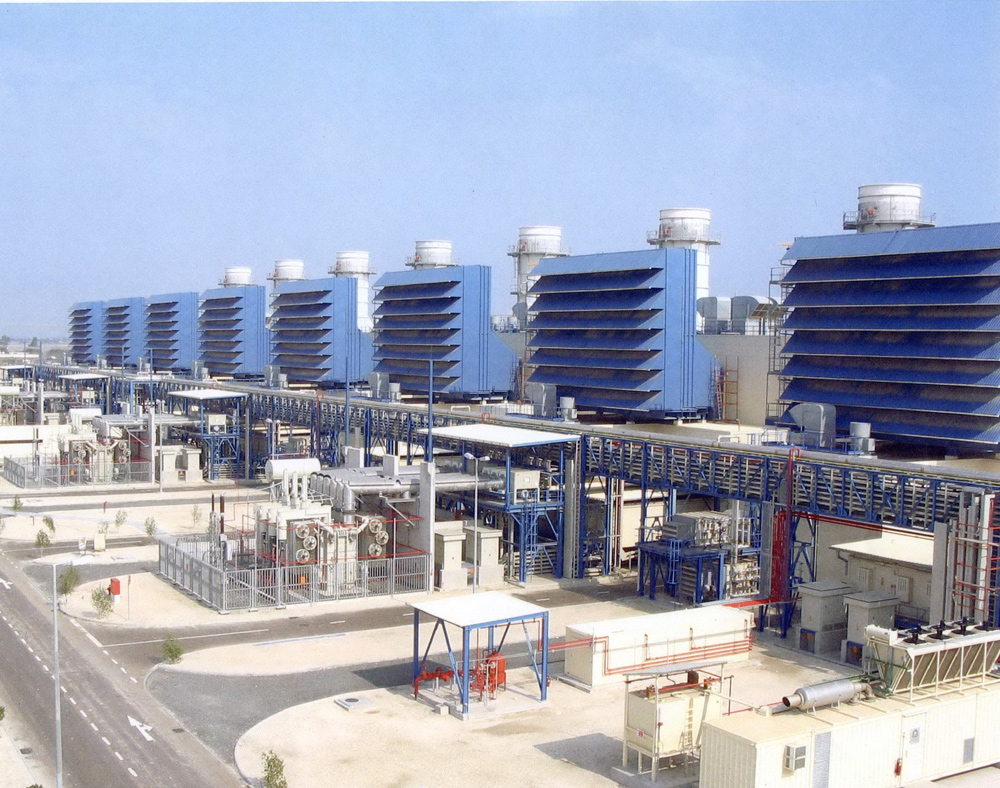
Al-Zour South Power Plant: Kuwait’s Largest Power Generation Complex
The Al-Zour South Power Plant is one of the largest power generation complexes in Kuwait and one of the most significant energy infrastructure projects in the Arabian Gulf region. Located on the southern coast of Kuwait, approximately 90 kilometres south of Kuwait City near the border with Saudi Arabia, it is a large-scale oil and gas fired power and water production facility that supplies a substantial proportion of Kuwait’s electricity and desalinated water. The plant is owned and operated by the Kuwait Ministry of Electricity, Water and Renewable Energy (MEWRE) and represents a critical component of Kuwait’s national energy infrastructure.
This post covers the project facts, the technology, the construction methodology, the ownership structure and the strategic significance of the Al-Zour South plant in the context of Kuwait’s energy sector.
Project Facts
| Item | Detail |
|---|---|
| Plant name | Al-Zour South Power and Water Plant |
| Location | Al-Zour, southern Kuwait – approximately 90 km south of Kuwait City |
| Total installed power capacity | Approximately 4,800 MW (across all units and phases) |
| Water desalination capacity | Approximately 486 MIGD |
| Technology – power | Steam turbine generation |
| Technology – water | Multi-Stage Flash (MSF) desalination |
| Primary fuel | Natural gas and crude oil / heavy fuel oil (HFO) |
| Owner and operator | Kuwait Ministry of Electricity, Water and Renewable Energy (MEWRE) |
| Offtaker | Kuwait national electricity and water grid |
| Development phases | Multiple phases – Units 1 through 15 developed over several decades |
| Coastal location | Arabian Gulf coast – seawater cooling and MSF desalination |
The Location – Al-Zour and Southern Kuwait
Al-Zour is located on the southern coast of Kuwait, approximately 90 kilometres south of Kuwait City, close to the border with Saudi Arabia. The area is part of the Al-Ahmadi Governorate – the governorate that contains Kuwait’s principal oil fields and the majority of its energy infrastructure, including the Mina Al-Ahmadi refinery, the Mina Abdullah refinery and the Shuaiba industrial area.
The Al-Zour location was selected for power and water production for reasons that are directly connected to the construction methodology and the operational requirements of a large thermal power and desalination complex:
- Arabian Gulf coastline – direct access to seawater for once-through cooling and MSF desalination, both of which require large and reliable volumes of seawater
- Proximity to oil and gas infrastructure – the Al-Ahmadi Governorate contains Kuwait’s principal oil fields and refinery infrastructure, providing ready access to crude oil and natural gas for the plant’s fuel supply
- Distance from Kuwait City – sufficient separation from the capital’s residential and commercial areas to allow large-scale industrial and energy infrastructure to be developed without conflicting with urban land uses
- Flat coastal terrain – the flat desert terrain of southern Kuwait simplified the civil engineering requirements for large-scale industrial development
- Grid connectivity – the location allowed the plant’s output to be transmitted efficiently to Kuwait City and the national grid
The Al-Zour area has become one of the most significant energy infrastructure zones in Kuwait. In addition to the Al-Zour South Power Plant, the area is home to the Al-Zour North Power Plant – a large independent power project (IPP) developed under a public-private partnership structure – and the Al-Zour Refinery, one of the largest refineries in the world, with a capacity of 615,000 barrels per day.
Kuwait’s Energy Sector – Context
Kuwait is a small but extraordinarily energy-rich country. With proven oil reserves of approximately 102 billion barrels – approximately 6% of the world’s total – and significant natural gas reserves, Kuwait has one of the most hydrocarbon-intensive economies in the world. Oil revenues account for approximately 90% of government revenues and approximately 40% of GDP. The Kuwait Petroleum Corporation (KPC) and its subsidiaries – Kuwait Oil Company (KOC), Kuwait National Petroleum Company (KNPC) and Petrochemical Industries Company (PIC) – are the dominant players in Kuwait’s energy sector.
Kuwait’s electricity sector is owned and operated by the government through the Ministry of Electricity, Water and Renewable Energy (MEWRE). Unlike many of its Gulf neighbours, Kuwait has been slower to introduce independent power projects (IPPs) and private sector participation in its electricity sector. The majority of Kuwait’s generation capacity – including the Al-Zour South plant – is owned and operated directly by MEWRE, funded by the government and supplied to consumers at heavily subsidised tariffs.
Kuwait’s electricity demand has grown rapidly over the past three decades, driven by population growth, economic development and the expansion of energy-intensive industries. Peak electricity demand in Kuwait reaches approximately 15,000–16,000 MW during the summer months, when air conditioning loads drive demand to its annual maximum. Kuwait’s total installed generation capacity is approximately 20,000 MW, of which the Al-Zour South plant represents a significant proportion.
Kuwait has no permanent rivers and negligible rainfall. All potable water is produced by desalination. Kuwait’s total water desalination capacity is approximately 500–600 MIGD, of which the Al-Zour South plant contributes a substantial share. The reliability of the desalination plants is therefore a matter of national importance – a prolonged failure of a major desalination plant would threaten the water security of the country.
The Technology
Steam Turbine Generation
The Al-Zour South Power Plant uses conventional steam turbine technology for power generation. In a steam turbine power plant, fuel – natural gas, crude oil or heavy fuel oil – is burned in a boiler to produce high-pressure, high-temperature steam. The steam is expanded through a turbine, converting its thermal energy into mechanical energy. The turbine drives a generator that converts the mechanical energy into electrical energy. The exhaust steam from the turbine is condensed back into water in a condenser and returned to the boiler to repeat the cycle.
Steam turbine technology is the oldest and most proven large-scale power generation technology in the world. It is less thermally efficient than combined cycle gas turbine (CCGT) technology – typically 35–40% compared to 55–60% for CCGT – but it is highly reliable, well-understood and capable of operating on a wide range of fuels, including crude oil and heavy fuel oil as well as natural gas. This fuel flexibility is a significant advantage in Kuwait, where the availability of crude oil and HFO from the country’s refineries provides an alternative fuel source when natural gas supply is constrained.
The Al-Zour South plant was developed over multiple phases spanning several decades, and the steam turbine units installed in the earlier phases reflect the technology available at the time of their construction. The plant’s multiple units – ranging from older units installed in the 1970s and 1980s to more recent units installed in the 1990s and 2000s – represent the evolution of steam turbine technology over this period, with later units incorporating improvements in turbine efficiency, emissions performance and control systems.
Dual-Fuel Capability – Oil and Gas
The Al-Zour South plant is designed to operate on both natural gas and oil – crude oil or heavy fuel oil – reflecting Kuwait’s position as a major oil producer and the historical availability of oil as a fuel for power generation in the country. Kuwait has used crude oil and HFO as fuel for power generation since the earliest days of its electricity sector, and many of its older power plants were originally designed to operate primarily on oil, with natural gas as a secondary fuel.
The dual-fuel capability of the Al-Zour South plant provides operational flexibility in the event of gas supply disruption. Kuwait’s domestic natural gas production is limited relative to its oil production, and the country has historically faced gas supply constraints that have required power plants to switch to oil-based fuels. The ability to switch between natural gas and oil ensures that the plant can continue to generate electricity and produce water even when gas supply is restricted.
However, operating on crude oil or HFO has significant disadvantages compared to natural gas. Oil-fired generation produces higher levels of CO₂, sulphur dioxide (SO₂), nitrogen oxides (NOx) and particulate matter than gas-fired generation. It also requires more complex fuel handling and storage infrastructure – crude oil and HFO must be stored in large tanks, heated to reduce their viscosity before use and treated to remove contaminants that could damage the boilers and turbines. The operational cost of oil-fired generation is also higher than gas-fired generation, reflecting the higher cost of oil relative to gas on an energy-equivalent basis.
Multi-Stage Flash (MSF) Desalination
The water desalination at Al-Zour South uses Multi-Stage Flash (MSF) technology, co-located with the steam turbine power generation to take advantage of the waste heat from the power generation process. MSF desalination is a thermal process in which seawater is heated using steam extracted from the steam turbine cycle and then passed through a series of chambers at progressively lower pressures. As the pressure drops in each stage, some of the seawater flashes to steam, which is condensed on heat exchanger tubes to produce fresh water.
The MSF desalination units at Al-Zour South are among the largest in Kuwait. The plant’s total desalination capacity of approximately 486 MIGD makes it one of the largest desalination complexes in the country. The MSF units operate in parallel, providing redundancy and flexibility to adjust water production to match demand. The product water is treated and remineralised before distribution to ensure that it meets the quality standards required for potable water supply.
Seawater Cooling
The Al-Zour South plant uses once-through seawater cooling for the steam turbine condensers. Seawater is drawn from the Arabian Gulf through the intake structure, passed through the condensers to condense the exhaust steam from the turbines, and returned to the Gulf through the outfall structure at a temperature above the intake temperature. The thermal discharge is managed through the design of the outfall structure and is monitored to ensure compliance with the environmental permit conditions.
The Arabian Gulf at Al-Zour is a sensitive marine environment. The Gulf is a semi-enclosed sea with limited water exchange with the Indian Ocean, making it particularly vulnerable to the cumulative effects of thermal and saline discharges from the multiple power and desalination plants located along its coastline. The environmental management of the cooling water and brine discharges from the Al-Zour South plant is an important operational obligation of MEWRE.
The Construction Methodology
The Al-Zour South Power Plant was developed over multiple phases spanning several decades, with each phase adding new generation and desalination capacity to the complex. The construction methodology evolved significantly from the early phases – built in the 1970s and 1980s using the construction techniques and equipment of that era – to the later phases, which incorporated more modern construction methods, equipment and quality management systems.
Phased Development
The phased development of the Al-Zour South complex is the defining characteristic of its construction history. Each phase added new steam turbine units and MSF desalination units to the complex, progressively increasing the plant’s total capacity. The phased approach allowed Kuwait’s electricity and water demand to be met incrementally as it grew, avoiding the risk of building more capacity than was needed at any given time and spreading the capital investment over a longer period.
The phased development also created significant construction methodology challenges. Each new phase had to be constructed adjacent to the operating plant, requiring careful planning and coordination to ensure that construction activities did not affect the reliability of the operating units. The interface between the construction site and the operating plant – shared roads, shared utilities, shared access routes – had to be managed carefully to maintain the safety of both the construction workforce and the operating personnel.
Civil and Structural Works
The civil works for each phase of the Al-Zour South complex included the boiler and turbine foundations, the turbine hall and boiler house structures, the MSF desalination building structures, the cooling water intake and outfall structures, the fuel oil storage and handling facilities, the electrical switchyard and the site infrastructure. The boiler and turbine foundations are massive reinforced concrete structures designed to support the weight of the boilers, steam turbines and generators and to provide the vibration isolation required to protect the rotating machinery from ground-borne vibration.
The cooling water intake and outfall structures required marine construction techniques – dredging, sheet piling and underwater concrete placement – to construct the intake and outfall channels in the Arabian Gulf. The intake structure draws seawater from the Gulf for the steam turbine condensers and the MSF desalination process. The outfall structure returns the warmed cooling water and brine reject to the Gulf at controlled temperatures and concentrations.
The fuel oil storage facilities at Al-Zour South are a significant civil engineering undertaking in their own right. Large crude oil and HFO storage tanks – typically 50,000–100,000 m³ capacity each – must be constructed to API 650 standards, with secondary containment bunds designed to contain the full volume of the largest tank in the event of a tank failure. The tank foundations must be designed to support the weight of the full tank and to prevent differential settlement that could damage the tank shell.
Boiler and Steam Turbine Installation
The installation of the boilers and steam turbines at Al-Zour South required specialist heavy lift equipment and precision installation techniques. The boilers – large pressure vessels in which fuel is burned to produce steam – are among the heaviest items of plant on the site. Their installation required heavy lift cranes and careful sequencing to ensure that the boiler components were installed in the correct order and that the completed boiler assembly met the design requirements for pressure containment and thermal performance.
The steam turbines and generators must be installed on their foundations to tight alignment tolerances – typically within fractions of a millimetre – to ensure that the rotating machinery operates without vibration and achieves its design performance. The alignment of the steam turbine and generator is verified using precision laser alignment equipment before the turbine is commissioned. Any misalignment that is not corrected before commissioning will result in vibration, bearing wear and reduced reliability during operation.
MSF Desalination Unit Erection
The MSF desalination units at Al-Zour South are large, complex pressure vessels that must be fabricated to exacting standards and installed with precision to ensure that the desalination process operates as designed. The erection of the MSF units involves the assembly of multiple pre-fabricated sections into the completed vessel, the installation of the heat exchanger tube bundles, the connection of the steam supply and condensate return pipework, the installation of the brine recirculation pumps and the connection of the seawater intake and brine outfall pipework.
The scale of the MSF desalination programme at Al-Zour South – with a total capacity of approximately 486 MIGD across multiple units – represents one of the largest MSF desalination installations in Kuwait. The erection of this many MSF units over the multiple phases of the plant’s development required a sustained programme of specialist desalination construction activity spanning several decades.
Construction in the Kuwait Desert Environment
Construction in Kuwait presents extreme climate challenges. Summer temperatures regularly exceed 50°C – among the highest recorded anywhere in the world. Humidity is high on the coast. Dust storms – known locally as shamal – are frequent and can reduce visibility to near zero and deposit large quantities of sand and dust on construction sites and equipment. Kuwait’s labour regulations require that outdoor construction work be suspended during the hottest part of the day in summer to protect workers from heat stress.
Concrete placement in extreme heat requires special measures – chilling of the concrete mix using ice and chilled water, placement at night or in the early morning, and careful curing to prevent premature drying and cracking. Sensitive equipment must be stored in climate-controlled facilities to protect it from heat, humidity and dust. Worker welfare – rest facilities, hydration stations, heat stress monitoring – is a critical safety and productivity issue that must be managed proactively throughout the construction programme.
The corrosive marine environment at Al-Zour – high humidity, salt-laden air, seawater exposure – requires that all structural steelwork, piping and equipment be protected against corrosion from the outset of construction. Hot-dip galvanising, epoxy coating and cathodic protection systems are used extensively across the plant to protect the structural and mechanical components from the corrosive effects of the Gulf environment.
Al-Zour North – The New Generation IWPP
While the Al-Zour South plant represents Kuwait’s traditional approach to power and water production – government-owned, steam turbine technology, oil and gas fuel – the adjacent Al-Zour North Power Plant represents the new generation of Kuwait’s energy infrastructure. Al-Zour North is an independent power project (IPP) developed under a public-private partnership structure, using combined cycle gas turbine (CCGT) technology and natural gas as the primary fuel.
Al-Zour North has a total power generation capacity of approximately 4,800 MW across three phases, making it one of the largest IPPs in the Middle East. It was developed by a consortium including ACWA Power, BP and local Kuwaiti investors under a long-term Power Purchase Agreement with the Kuwait Authority for Partnership Projects (KAPP). The Al-Zour North plant represents a significant shift in Kuwait’s approach to power sector development – from direct government ownership and operation to private sector investment and operation under a regulated framework.
The contrast between Al-Zour South and Al-Zour North illustrates the evolution of Kuwait’s power sector over the past five decades – from the government-built, oil-fired steam turbine plants of the 1970s and 1980s to the privately financed, gas-fired CCGT plants of the 2010s and 2020s. Both plants are critical components of Kuwait’s electricity infrastructure, and both will continue to play important roles in meeting Kuwait’s growing electricity demand for decades to come.
Al-Zour Refinery – The Industrial Context
The Al-Zour area is also home to the Al-Zour Refinery – one of the largest and most modern refineries in the world, with a processing capacity of 615,000 barrels per day. The Al-Zour Refinery was developed by Kuwait National Petroleum Company (KNPC) and entered commercial operation in 2022. It is designed to process Kuwait’s heavy crude oil into high-value refined products, including low-sulphur fuel oil that meets the International Maritime Organization’s (IMO) 2020 sulphur cap requirements for marine fuels.
The Al-Zour Refinery’s proximity to the Al-Zour South Power Plant creates both opportunities and challenges. The refinery is a major electricity consumer – a refinery of this scale requires approximately 500–700 MW of electrical power for its process units, utilities and infrastructure. The Al-Zour South Power Plant is one of the sources of electricity for the refinery, through the national grid. The refinery also produces fuel oil and other hydrocarbon products that can be used as fuel for the power plant, creating a potential synergy between the two facilities.
Kuwait’s Energy Transition and the Future of Al-Zour South
Kuwait has committed to a programme of energy diversification and carbon reduction as part of its Kuwait Vision 2035 and its contributions to the Paris Agreement. The country has set a target of generating 15% of its electricity from renewable energy sources by 2030, with solar photovoltaic generation as the primary renewable technology. The Shagaya Renewable Energy Park – a large-scale solar, wind and concentrated solar power project in the Kuwaiti desert – is the flagship renewable energy project in Kuwait’s diversification programme.
The transition to renewable energy and the introduction of more efficient CCGT generation capacity – through projects like Al-Zour North – will progressively reduce the role of the older steam turbine units at Al-Zour South in Kuwait’s generation mix. As the older units reach the end of their operational lives, they will be retired and replaced by more efficient and lower-carbon generation capacity. The MSF desalination capacity at Al-Zour South may also be progressively replaced by reverse osmosis (RO) desalination, which is significantly less energy-intensive and more compatible with a low-carbon energy future.
However, the transition will take time. Kuwait’s electricity demand continues to grow, and the reliable baseload generation provided by the Al-Zour South plant remains essential to grid stability and security of supply. The plant’s dual-fuel capability – its ability to operate on both natural gas and oil – provides a valuable insurance policy against fuel supply disruptions that will remain relevant for as long as the plant is in operation.
Summary
The Al-Zour South Power Plant is one of Kuwait’s largest and most strategically important power and water production complexes. Located on the southern coast of Kuwait, approximately 90 kilometres south of Kuwait City, it uses steam turbine technology and Multi-Stage Flash desalination to produce electricity and desalinated water from natural gas and oil. With an installed power generation capacity of approximately 4,800 MW and a water desalination capacity of approximately 486 MIGD, it supplies a substantial proportion of Kuwait’s electricity and water needs. Developed over multiple phases spanning several decades and owned and operated by the Kuwait Ministry of Electricity, Water and Renewable Energy, it represents the foundation of Kuwait’s energy infrastructure – built in an era when oil was the dominant fuel for power generation and steam turbine technology was the standard for large-scale electricity production. The key facts are:
- Location – Al-Zour, southern Kuwait – approximately 90 km south of Kuwait City, Arabian Gulf coast
- Total installed power generation capacity – approximately 4,800 MW
- Water desalination capacity – approximately 486 MIGD MSF
- Technology – steam turbine generation with MSF desalination co-generation
- Fuel – natural gas (primary) and crude oil / HFO (secondary) – dual-fuel capability
- Owner and operator – Kuwait Ministry of Electricity, Water and Renewable Energy (MEWRE)
- Developed over multiple phases spanning several decades
- Located adjacent to Al-Zour North IPP (4,800 MW CCGT) and Al-Zour Refinery (615,000 bpd)
- Critical component of Kuwait’s national electricity and water security
- Part of Kuwait’s energy transition programme toward renewable energy and more efficient generation technology
Interested in Steam Turbine Power Plant or Desalination Construction Methodology?
We work with contractors, owners and project teams on construction methodology, programme development and Efficient Construction Cost (ECC) modelling for steam turbine power generation, MSF desalination and large-scale energy infrastructure projects. Our approach starts with the construction methodology – and builds the programme and cost model from there.
Use the form below to discuss your project.
The content on PossessionPlanning.com is for informational purposes only. We make no guarantees regarding completeness or reliability. PossessionPlanning.com is an independent platform, not affiliated with or endorsed by any
rail
operator or government agency. Read our
Terms of Use.
// RESOURCES & REFERENCES
// OUR PARTNERS & NETWORK
// SUPPORT OUR MISSION
✨ Help us continue building tools that simplify complexity!
Every contribution fuels new features and improvements.


Thank you for being part of our journey! 🚀
// CONTACT US
Discover more from Construction Methodology
Subscribe to get the latest posts sent to your email.
Discover more from Construction Methodology
Subscribe to get the latest posts sent to your email.