Taweelah Reverse Osmosis Desalination Plant: The World’s Largest – and Solar Powered
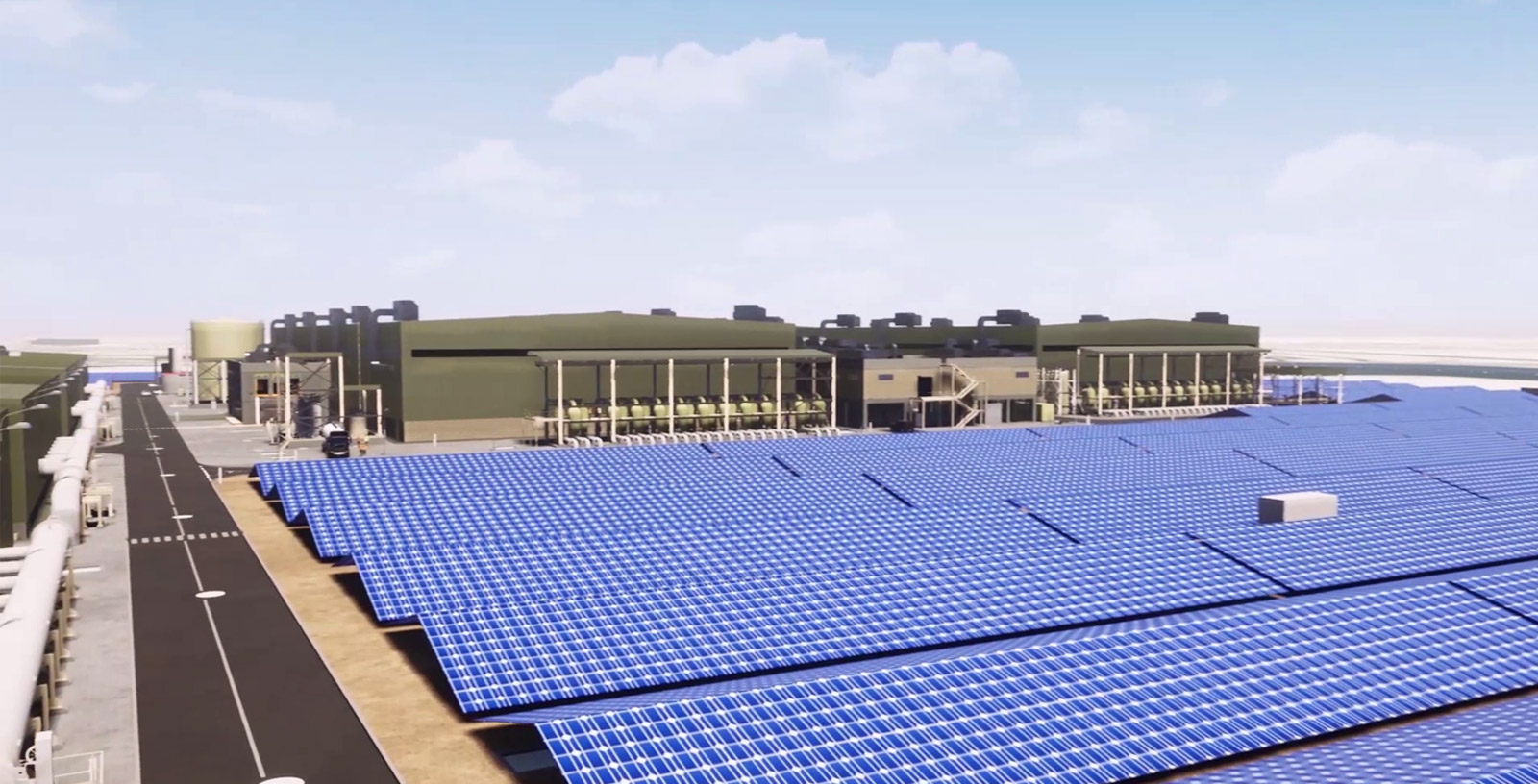
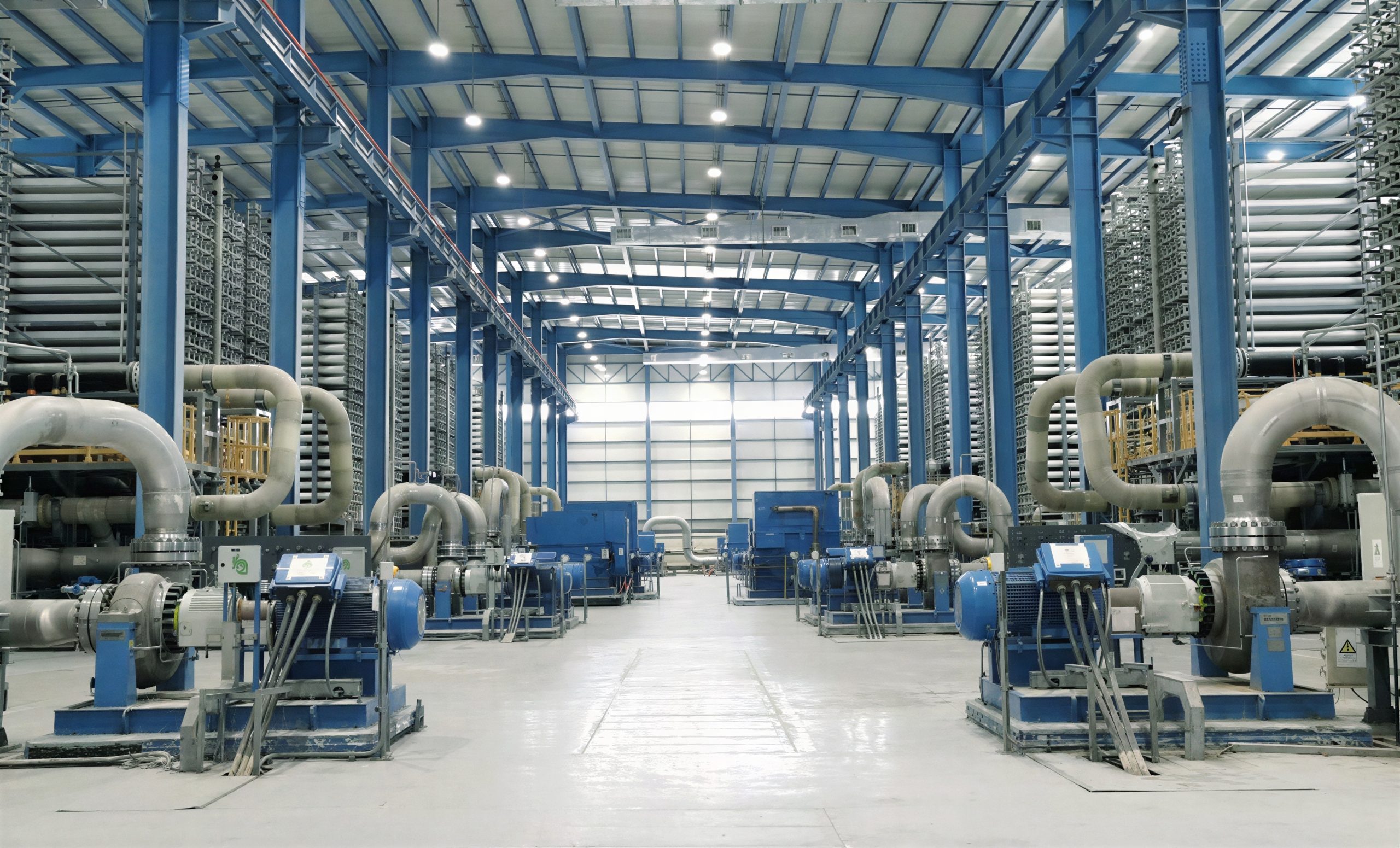
The Taweelah Reverse Osmosis Desalination Plant in Abu Dhabi, United Arab Emirates, is the largest operational reverse osmosis desalination facility in the world. With a capacity of 909,200 cubic metres of potable water per day – equivalent to 200 million imperial gallons per day (MIGD) – it is 44% larger than the previous record holder. It supplies over 350,000 households across Abu Dhabi and integrates a co-located solar photovoltaic field that generates more than 70 MWp of clean energy. It is not just the largest desalination plant in the world. It is a demonstration that large-scale water production can be decarbonised, cost-competitive and financially innovative at the same time.
This post covers the project facts, the technology, the construction methodology, the financial structure and what the Taweelah plant means for the future of desalination.
Project Facts
| Item | Detail |
|---|---|
| Location | Taweelah, Abu Dhabi, United Arab Emirates |
| Capacity | 909,200 m³/day (200 MIGD) |
| Technology | Seawater reverse osmosis (SWRO) |
| Solar field | 70 MWp photovoltaic |
| Energy consumption | 2.81 kWh per m³ – world record for a plant of this scale |
| Water cost | Less than US$0.50 per m³ |
| Project cost | US$874 million |
| Offtaker | Emirates Water and Electricity Company (EWEC) |
| Offtake contract | Water Purchase Agreement (WPA) – 30 years |
| Commercial operations date | Q1 2024 |
| Project company | Taweelah RO Desalination Company LLC |
| Investors | ACWA Power (40%), Mubadala, TAQA |
| EPC contractor | SEPCOIII Electric Power Construction Co. Ltd / Abengoa Agua S.A. |
| Engineering | IDOM (basic and detailed engineering) |
| O&M company | NOMAC Taweelah Water Desalination Services LLC |
| Key equipment | Toray membranes, Flowserve pumps, Siemens control systems |
| Award | Desalination Plant of the Year – 2023 Global Water Awards |
Why Taweelah Matters
The UAE is one of the most water-scarce countries in the world. It has no permanent rivers and negligible rainfall. Desalination is not a supplement to the water supply – it is the water supply. For decades, the UAE relied on thermal desalination – Multi-Stage Flash (MSF) and Multi-Effect Distillation (MED) – processes that are energy-intensive, carbon-heavy and tightly coupled to power generation. The Taweelah plant represents a fundamental break from that model.
Reverse osmosis is 96% more energy-efficient than thermal desalination and reduces carbon emissions by over 85%. By building the world’s largest RO plant and co-locating it with a solar photovoltaic field, EWEC has demonstrated that large-scale desalination can be decoupled from fossil fuel power generation and delivered at a cost that is competitive with – and in many cases lower than – conventional water production methods.
At less than US$0.50 per cubic metre, the Taweelah plant produces water at a cost that is approximately ten times lower than the cost of tap water in San Francisco. That is not a marginal improvement. It is a structural shift in what is economically possible in water production.
The Technology
Seawater Reverse Osmosis (SWRO)
Reverse osmosis is a membrane-based desalination process. Seawater is pressurised and forced through semi-permeable membranes that allow water molecules to pass through while rejecting dissolved salts and other contaminants. The product is potable water. The reject stream – brine – is returned to the sea at controlled concentrations to minimise environmental impact.
The key advantage of RO over thermal desalination is energy efficiency. Thermal processes heat seawater to produce steam, which is then condensed into fresh water. This requires large quantities of thermal energy. RO uses mechanical energy – high-pressure pumps – to force water through membranes. The energy consumption of modern SWRO plants is 2.5–3.5 kWh per cubic metre. The Taweelah plant achieves 2.81 kWh per cubic metre – a world record for a plant of this scale.
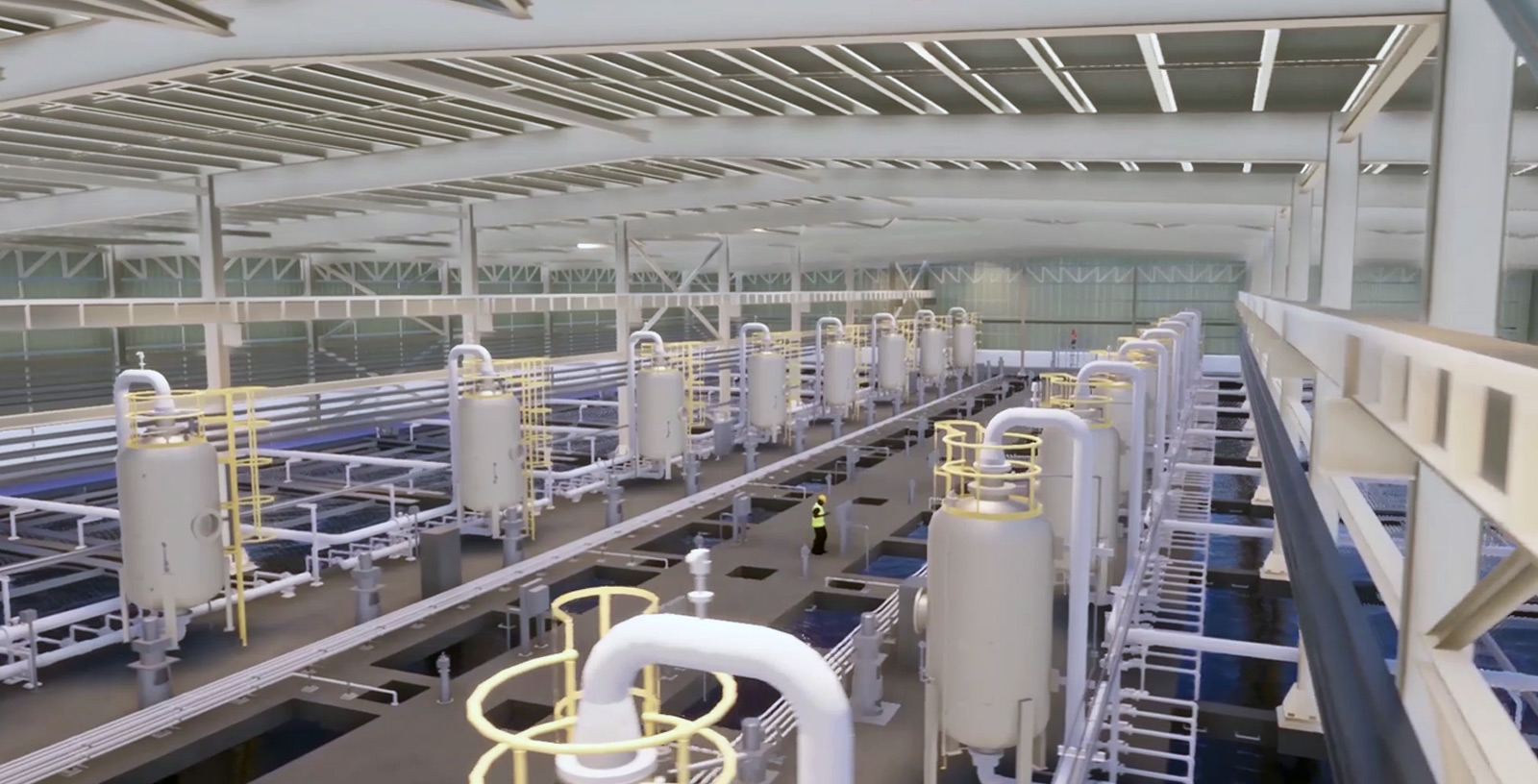
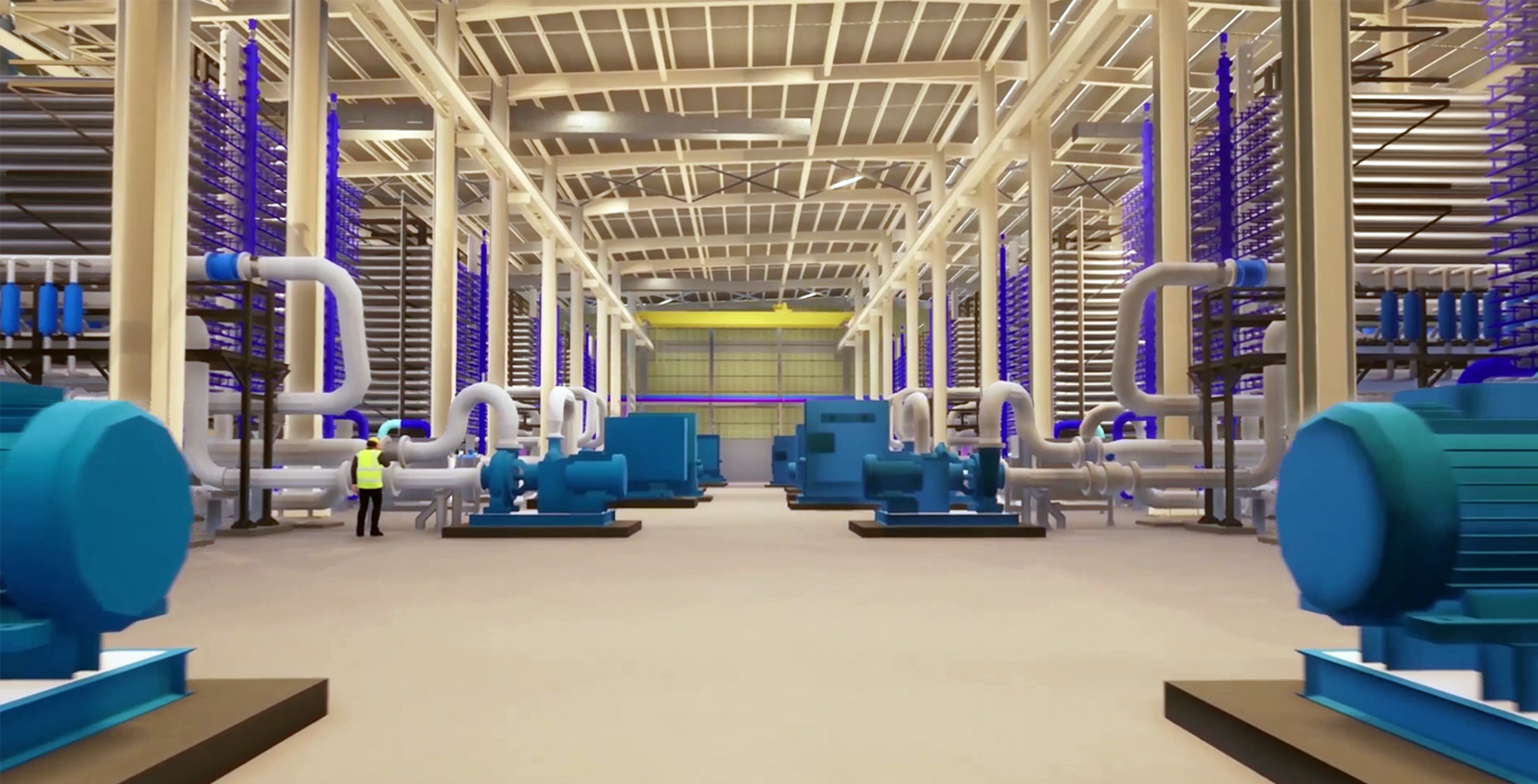
The Taweelah plant uses Toray RO membranes – one of the leading membrane technologies in the world. The membranes are housed in pressure vessels arranged in trains. Each train processes a defined flow of seawater and produces a defined flow of product water. The plant has multiple trains operating in parallel, providing redundancy and flexibility to adjust output to match demand.
Energy Recovery
A critical component of the energy efficiency of the Taweelah plant is the energy recovery system. In SWRO, the brine reject stream leaves the membranes at high pressure – close to the feed pressure. Without energy recovery, this pressure energy would be wasted. Energy recovery devices (ERDs) capture the pressure energy from the brine stream and use it to pre-pressurise the incoming seawater feed, reducing the energy required from the high-pressure pumps. Modern ERDs achieve energy recovery efficiencies of 95–98%. The Flowserve pumps at Taweelah incorporate advanced energy recovery technology that contributes directly to the record-low specific energy consumption of 2.81 kWh per cubic metre.
Solar Photovoltaic Integration
The 70 MWp solar photovoltaic field co-located with the Taweelah plant is one of its most distinctive features. The solar field generates more than 30% of the plant’s energy requirements from clean sources. This is not a token gesture toward sustainability – it is a structural component of the plant’s economics and its carbon performance.
The integration of solar power with a large SWRO plant presents technical challenges. Solar generation is intermittent – it varies with the time of day, cloud cover and season. SWRO plants operate most efficiently at steady-state conditions. Managing the variability of solar generation while maintaining stable plant operation requires sophisticated control systems. The Siemens control systems at Taweelah manage this integration, optimising the use of solar energy while maintaining the required water production output.
The solar integration reduces Abu Dhabi’s annual carbon emissions by 2.5 million tonnes of CO₂ equivalent. Over the 30-year life of the Water Purchase Agreement, that is 75 million tonnes of CO₂ equivalent avoided – a significant contribution to the UAE’s Net Zero by 2050 strategy.
The Engineering
IDOM, the Spanish engineering firm, was responsible for the basic and detailed engineering of the Taweelah plant within SEPCOIII’s EPC scope, as well as the integration of the engineering developed by the technologist, Abengoa Agua. This was not the first time SEPCOIII had entrusted IDOM with this role – the two organisations had worked together on previous desalination projects, and the Taweelah plant represented a continuation and scaling-up of that collaboration.
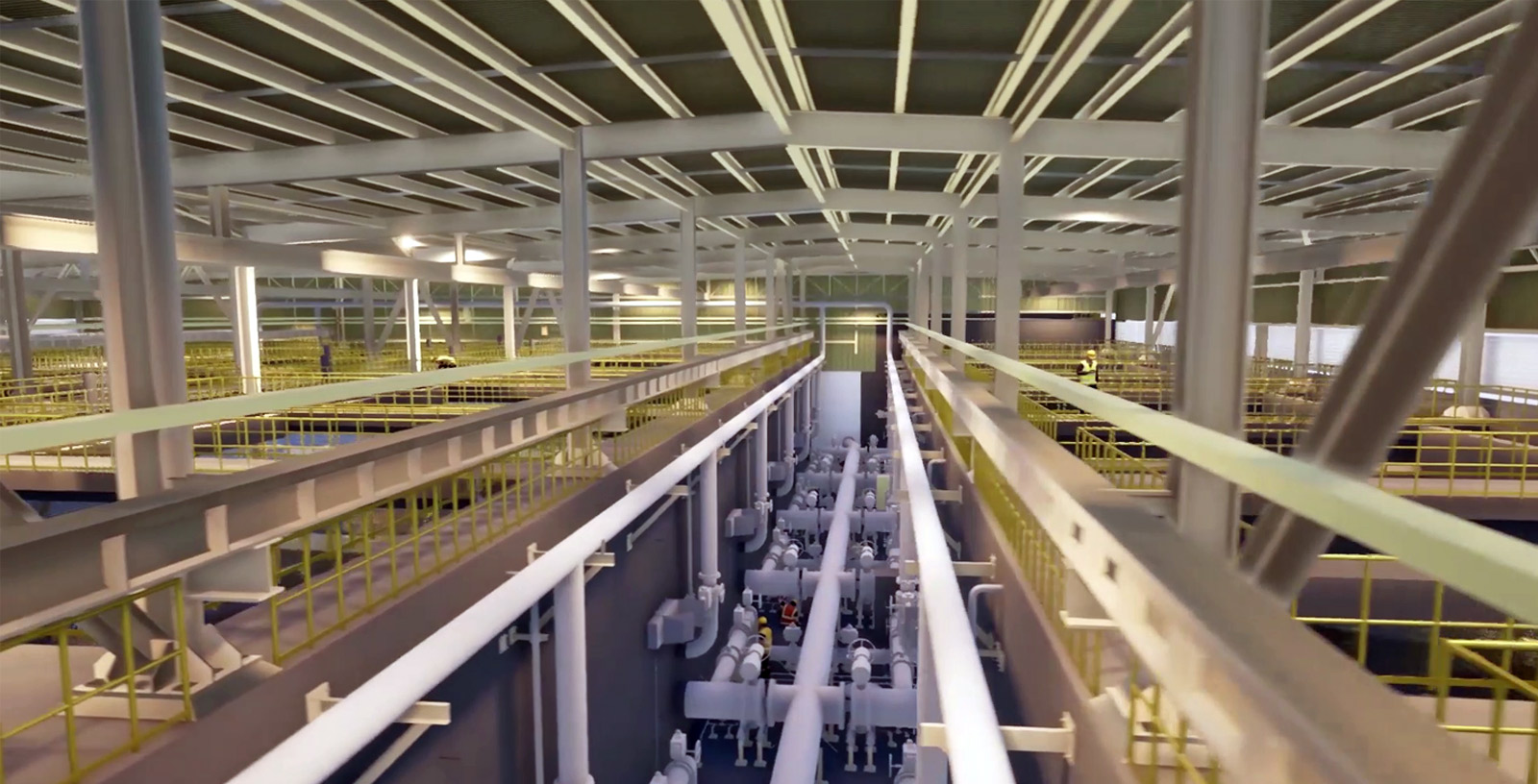
The engineering scope covered the full plant – intake structures, pre-treatment systems, high-pressure pumping systems, RO membrane trains, energy recovery systems, post-treatment and remineralisation, product water storage and distribution, brine outfall, the solar photovoltaic field and the plant control and instrumentation systems. The integration of the solar field with the RO plant required careful engineering to ensure that the variable solar generation did not destabilise the RO process.
The scale of the engineering task was significant. At 909,200 m³/day, the Taweelah plant is 44% larger than the previous world record holder. There was no directly comparable precedent to draw on. The engineering team had to extrapolate from smaller plants, apply conservative design margins and validate the design through detailed modelling and simulation before construction began.
The Construction Methodology
The Taweelah plant was delivered under a build-own-operate (BOO) model by the project company, Taweelah RO Desalination Company LLC. The EPC contract was awarded to a joint venture of SEPCOIII Electric Power Construction Co. Ltd and Abengoa Agua S.A. SEPCOIII is one of China’s largest power and water infrastructure contractors. Abengoa Agua is a specialist water technology and engineering company with extensive experience in large-scale desalination.
The construction of a plant of this scale in the UAE environment presents specific methodology challenges:
- Extreme heat – construction in Abu Dhabi involves summer temperatures exceeding 45°C. Concrete placement, membrane installation and equipment commissioning must be managed carefully to avoid heat-related quality failures. Concrete must be placed in the early morning or at night during summer months. Membrane elements must be protected from UV and heat during storage and installation.
- Marine intake and outfall structures – the seawater intake and brine outfall structures are constructed in the Arabian Gulf. Marine construction in the Gulf requires careful management of tidal conditions, wave action and the corrosive marine environment. The intake structure must be designed and constructed to prevent marine organisms from entering the plant and fouling the membranes.
- Large-scale civil works – the plant footprint is enormous. The civil works include intake pump stations, pre-treatment basins, RO building structures, product water reservoirs, chemical storage facilities and the solar field civil works. The civil works programme must be carefully sequenced to allow the mechanical and electrical installation to follow closely behind.
- Membrane train installation – the installation of the RO membrane trains is a precision activity. The pressure vessels must be installed level and aligned to tight tolerances. The membrane elements must be installed in the correct orientation and sequence. The interconnecting pipework must be installed without introducing contamination that could damage the membranes.
- Commissioning – commissioning a plant of this scale is a complex, multi-stage process. Each train must be commissioned individually before the plant is brought to full capacity. The commissioning process includes flushing, pressure testing, membrane conditioning and performance testing. The solar field must be commissioned and integrated with the plant control system before the plant can operate at its design energy efficiency.
The Financial Structure
The Taweelah plant was financed under a project finance structure – a non-recourse financing model in which the debt is secured against the project’s assets and cash flows rather than the balance sheets of the sponsors. The project company, Taweelah RO Desalination Company LLC, is owned by ACWA Power (40%), Mubadala and TAQA. The project is underpinned by a 30-year Water Purchase Agreement with EWEC, which provides the long-term revenue certainty required to support the project finance structure.
The Taweelah project achieved two significant financial firsts:
- Water cost below US$0.50 per cubic metre – the integration of co-located solar power allowed the project to achieve a water tariff of less than US$0.50 per cubic metre. This is a remarkable achievement given Abu Dhabi’s relatively high energy prices and the scale of the plant. The low tariff reflects the efficiency of the RO technology, the contribution of the solar field to reducing energy costs and the competitive tension in the procurement process.
- World’s first sustainable loan for a desalination project – the Taweelah project secured the world’s first “sustainable loan” qualification for a desalination project. A sustainable loan is a loan instrument in which the terms are linked to the borrower’s performance against defined sustainability metrics. The sustainable loan qualification reflects the project’s strong environmental credentials – its low carbon intensity, its use of renewable energy and its contribution to the UAE’s Net Zero by 2050 strategy.
Decoupling Water from Power
One of the most significant strategic implications of the Taweelah plant is its contribution to EWEC’s programme to decouple water production from power generation. Traditional thermal desalination in the UAE was tightly coupled to power generation – the thermal energy required for desalination was a by-product of power generation, and the two were co-located in combined water and power plants. This coupling meant that water production was dependent on power generation, and that the carbon intensity of water production was tied to the carbon intensity of the power sector.
By transitioning to RO, EWEC breaks this coupling. RO plants can be powered by any source of electricity – including renewable energy. They do not require thermal energy. They can be located independently of power plants. And they can be scaled up or down more flexibly than thermal plants, which have high minimum load requirements.
EWEC’s target is that 90% of Abu Dhabi’s water desalination will use reverse osmosis by 2030, reducing carbon emissions associated with water production by 88%. The Taweelah plant is the centrepiece of this transition. EWEC has already commissioned four additional RO facilities to continue the programme.
“Taweelah RO represents a transformative shift in our water and power generation portfolio, driving decarbonization in line with our Net Zero by 2050 goals,” said Othman Al Ali, CEO of EWEC. “By 2030, 90% of Abu Dhabi’s water desalination will utilize reverse osmosis, reducing carbon emissions associated with water production by 88%.”
Recognition
The Taweelah plant was named Desalination Plant of the Year at the 2023 Global Water Awards – the most prestigious recognition in the global water industry. The award reflects the plant’s achievements across multiple dimensions: scale, efficiency, cost, carbon performance and financial innovation. It is a recognition not just of what the Taweelah plant has achieved but of what it represents for the future of the industry.
What Taweelah Means for the Future of Desalination
The Taweelah plant is significant not just because of its scale but because of what it demonstrates is possible. It shows that:
- Large-scale seawater desalination can be powered predominantly by renewable energy
- The specific energy consumption of SWRO at scale can be reduced to below 3 kWh per cubic metre
- The cost of desalinated water can be reduced to below US$0.50 per cubic metre even in high-energy-cost environments
- Desalination projects can qualify for sustainable finance instruments when they demonstrate strong environmental credentials
- The decoupling of water production from fossil fuel power generation is technically and commercially achievable at the largest scales
For regions facing water scarcity – the Middle East, North Africa, parts of Asia, the western United States, Australia – the Taweelah plant is a proof of concept for a new model of water security. One that does not require the burning of fossil fuels, does not require co-location with thermal power plants and can be delivered at a cost that is competitive with conventional water sources.
The construction methodology, the engineering approach and the financial structure developed for the Taweelah plant will inform the design and delivery of large-scale desalination projects around the world for the next decade and beyond. It is, in the most literal sense, a world-leading project.
Summary
The Taweelah Reverse Osmosis Desalination Plant is the world’s largest operational desalination facility. At 909,200 m³/day, powered by a 70 MWp solar field, achieving a specific energy consumption of 2.81 kWh per cubic metre and delivering water at less than US$0.50 per cubic metre, it sets new benchmarks across every dimension of desalination performance. It is the product of a global collaboration between ACWA Power, Mubadala, TAQA, EWEC, SEPCOIII, Abengoa, IDOM and a supply chain that spans the world’s leading water technology companies. And it is a demonstration that the future of water production – sustainable, low-carbon, cost-competitive – is not a distant aspiration. It is already operating in Abu Dhabi.
Interested in Large-Scale Water Infrastructure or Desalination Construction Methodology?
We work with contractors, owners and project teams on construction methodology, programme development and Efficient Construction Cost (ECC) modelling for large-scale water and infrastructure projects. Our approach starts with the construction methodology – and builds the programme and cost model from there.
Use the form below to discuss your project.
The content on PossessionPlanning.com is for informational purposes only. We make no guarantees regarding completeness or reliability. PossessionPlanning.com is an independent platform, not affiliated with or endorsed by any
rail
operator or government agency. Read our
Terms of Use.
// RESOURCES & REFERENCES
// OUR PARTNERS & NETWORK
// SUPPORT OUR MISSION
✨ Help us continue building tools that simplify complexity!
Every contribution fuels new features and improvements.


Thank you for being part of our journey! 🚀
// CONTACT US
Discover more from Construction Methodology
Subscribe to get the latest posts sent to your email.
Discover more from Construction Methodology
Subscribe to get the latest posts sent to your email.