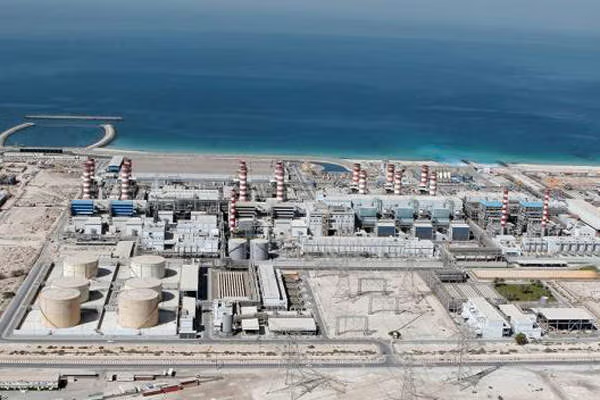
Jebel Ali Power and Desalination Complex: The World’s Largest Single-Site Natural Gas Power Generation Facility
The Jebel Ali Power and Desalination Complex in Dubai is confirmed by Guinness World Records as the largest single-site natural gas power generation facility in the world. With a total electricity generation capacity of 9,547 MW and a water desalination capacity of 490 million imperial gallons per day (MIGD), it is the backbone of Dubai’s electricity and water supply and one of the most technically advanced and operationally excellent power and water complexes on the planet. Owned and operated by Dubai Electricity and Water Authority (DEWA), it supplies electricity and water to over one million customers across the Emirate of Dubai and has been assessed by McKinsey as one of the best five plants in the world among 60 prominent global utilities that use electricity and water co-generation systems.
This post covers the history, the technology, the construction methodology, the operational performance, the workforce, the smart technology programme and the strategic significance of the Jebel Ali complex in the context of Dubai’s energy and water security.
Project Facts
| Item | Detail |
|---|---|
| Location | Jebel Ali, approximately 35 km south of Dubai city centre, Arabian Gulf coast |
| Owner and operator | Dubai Electricity and Water Authority (DEWA) |
| World record | Guinness World Records – largest single-site natural gas power generation facility in the world |
| Total power generation capacity | 9,547 MW (complex) – DEWA total installed capacity 12,900 MW |
| Total water desalination capacity | 490 MIGD |
| Plant 1 | 2,761 MW – Stations D, E and G |
| Plant 2 | 6,786 MW – Stations K, L and M |
| Primary fuel | Natural gas |
| Secondary fuel | Diesel oil / Heavy fuel oil (HFO) |
| Availability (summer 2020) | 99.73% |
| Reliability (summer 2020) | 99.96% |
| Generation efficiency improvement (2006–2020) | 33.41% |
| Carbon emission reduction (vs 2006) | 31% – equivalent to planting 327 million trees |
| NOx emission reduction | 74% |
| SO₂ emission reduction | 99% |
| Optimal fuel heat utilisation | 80–90% – among the highest in the world |
| Customers supplied | Over 1 million customers in Dubai |
Location and Strategic Context
Jebel Ali is located approximately 35 kilometres south of Dubai city centre on the Arabian Gulf coast. The name means “mountain of the high” in Arabic – a reference to the low rocky outcrop that characterises the otherwise flat coastal terrain. The location was selected for industrial and energy development in the 1970s for reasons that remain compelling today:
- Arabian Gulf coastline – direct access to seawater for once-through cooling and seawater desalination, both of which require large and reliable volumes of seawater
- Distance from the city centre – sufficient separation from the residential and commercial areas of Dubai to allow large-scale industrial and energy infrastructure to be developed without conflicting with urban land uses
- Port access – proximity to Jebel Ali Port, the largest man-made port in the world, enabling the delivery of fuel, equipment and construction materials by sea
- Flat terrain – the flat coastal terrain simplified the civil engineering requirements for large-scale industrial development
- Grid connectivity – the location allowed the plant’s output to be transmitted efficiently to Dubai’s growing load centres to the north and east
The Jebel Ali Free Zone (JAFZA), established in 1985 adjacent to the port and the power plant, has grown into one of the world’s largest and most successful free trade zones, hosting over 9,000 companies from more than 100 countries. The reliable power and water supply provided by the Jebel Ali complex has been a critical enabler of JAFZA’s success. The free zone contributes approximately 23% of Dubai’s GDP and handles more than 60% of the UAE’s non-oil trade. Every company in JAFZA depends on the electricity and water supply provided by the Jebel Ali complex.
DEWA – Dubai Electricity and Water Authority
The Jebel Ali Power and Desalination Complex is owned and operated by Dubai Electricity and Water Authority (DEWA), the government-owned utility responsible for the generation, transmission and distribution of electricity and the production and distribution of water across the Emirate of Dubai. DEWA was established in 1992 through the merger of the Dubai Electricity Company and the Dubai Water Department.
DEWA’s mandate – to provide reliable, efficient and sustainable electricity and water to Dubai’s residents, businesses and industries – is delivered through a portfolio of power generation and water desalination assets that includes the Jebel Ali complex, the Mohammed bin Rashid Al Maktoum Solar Park (the world’s largest single-site solar park, with a planned capacity of 5,000 MW by 2030), pumped storage hydropower and a programme of energy efficiency improvements across Dubai’s built environment.
DEWA listed on the Dubai Financial Market (DFM) in April 2022 in one of the largest IPOs in the history of the Middle East, raising approximately US$6.1 billion and valuing DEWA at approximately US$33.8 billion. The IPO reflected the strategic importance of DEWA’s assets and the reliability of its regulated revenue streams.
HE Saeed Mohammed Al Tayer, MD and CEO of DEWA, has stated: “We work in line with the vision of His Highness Sheikh Mohammed bin Rashid Al Maktoum, Vice President and Prime Minister of the UAE and Ruler of Dubai, to provide an advanced infrastructure that keeps pace with sustainable development needs. DEWA has outlined expansion plans for the energy and water infrastructure based on demand forecasts until 2030. Innovation is a key pillar in developing our work system and improving our services to the highest standards by increasing the use of disruptive technologies and the latest Fourth Industrial Revolution technologies such as Artificial Intelligence, Unmanned Aerial Vehicles, Blockchain, Energy Storage, Internet of Things, and others.”
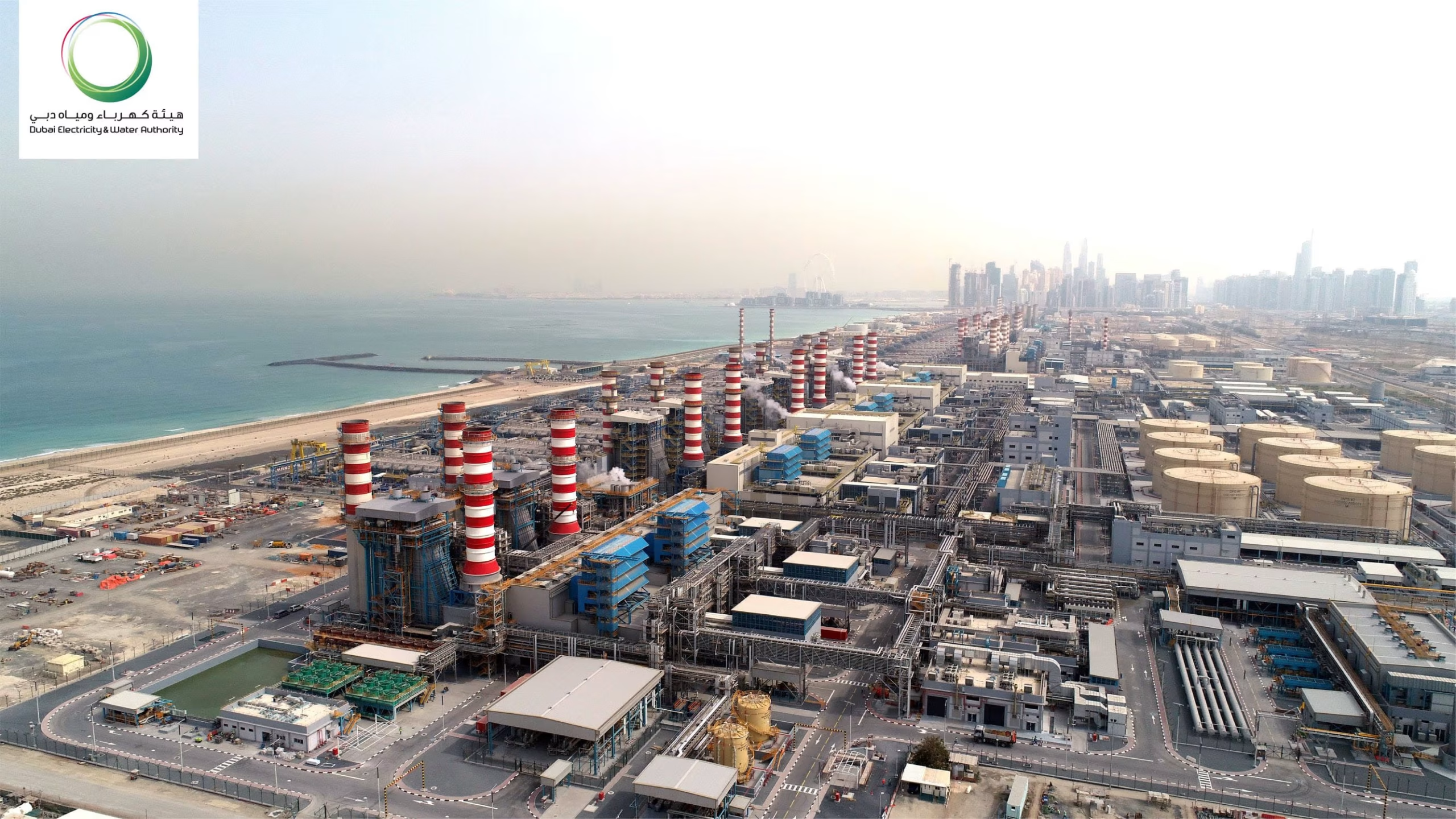 The Complex – Plant 1 and Plant 2
The Jebel Ali Power and Desalination Complex comprises two main plants for power generation and water desalination, together accommodating seven stations with a combined capacity of 9,547 MW of electricity and 490 MIGD of desalinated water.
Plant 1 – Stations D, E and G
Plant 1 has a production capacity of 2,761 MW and comprises Stations D, E and G. These are the older stations in the complex, developed in the earlier phases of the Jebel Ali programme. They use steam turbine generation technology combined with Multi-Stage Flash (MSF) desalination – the standard technology combination for combined power and water plants in the Gulf during the period of their construction. Plant 1 stations have been progressively upgraded and optimised over their operational lives to improve efficiency and reduce emissions.
Plant 2 – Stations K, L and M
Plant 2 has a production capacity of 6,786 MW and comprises Stations K, L and M. Plant 2 represents the more modern generation of the Jebel Ali complex, incorporating combined cycle gas turbine (CCGT) technology and advanced desalination systems. Jebel Ali M-Station is the largest and most recently expanded station in the complex and is described in detail below.
Jebel Ali M-Station – The Complex’s Flagship
Jebel Ali M-Station is the UAE’s largest power production and desalination plant and the most recently expanded station in the Jebel Ali complex. Commissioned in April 2013 at a total investment of approximately AED 10 billion (approximately US$2.7 billion), it has an installed capacity of 2,060 MW of electricity and 140 MIGD of desalinated water – sufficient to serve the electricity needs of approximately one million households in Dubai.
M-Station is located along the shore of the Arabian Gulf, adjacent to the Jebel Ali Free Zone, within the Jebel Ali Power Plant and Desalination Complex. It is operated by DEWA and was constructed by a consortium of Fisia Italimpianti, Gruppo Impregilo and Doosan Heavy Industries as general contractors, with Fichtner as the consultant.
M-Station Technology
M-Station uses combined cycle gas turbine (CCGT) technology for power generation and Multi-Stage Flash (MSF) desalination for water production. The key technical features of M-Station are:
- Gas turbines – fitted with dry-low NOx combustion chambers for natural gas (primary fuel) and diesel oil (back-up fuel) operations, minimising nitrogen oxide emissions during normal operation
- Desalination plant – eight 17.5 MIGD desalination units using the Multi-Stage Flash process with brine recirculation, giving a total desalination capacity of 140 MIGD
- Four boilers – supporting the steam generation and desalination processes
- Thermal efficiency – 82.4% prior to the expansion programme
- Wet compression technology – Siemens introduced its wet compression technology at M-Station as a pilot project, using water injection to increase the power output of a gas turbine by 15% within 20 minutes by reducing compressor inlet temperatures, using no extra fuel
M-Station Key Equipment Suppliers
| Supplier | Equipment / Scope |
|---|---|
| Alstom | Three 220 MW COMAX steam turbines and TOPAIR air-cooled turbogenerators – contract value approximately €60 million |
| Siemens | Gas turbines, wet compression technology, expansion contract (2015) |
| Fisia Italimpianti | Eight MSF desalination units |
| Korea Electrical Contractors Association | Electrical contractor |
| Hyosung Power and Industrial Systems | 16 high-voltage motors |
| Process Group International | Filter vessels and gas metering skids |
| Torishima | Brine recirculation pump |
| Kubota | Double suction volute pump |
| Inco | Eight units of cladded piping for the desalination plant |
| Cortec | MCI technology to protect reinforcing metal in concrete from corrosion |
| Cana Oil and Gas Services | Painting works for structures and equipment |
| Idrotec | Meteomarine and morphological studies, final design of marine works for seawater outfall and slipway |
| Fichtner | Consultant – construction of 400 kV switchyard |
| Mott MacDonald | Consultant – expansion project |
M-Station Expansion (2015–2018)
In February 2015, DEWA awarded a contract to Siemens valued at AED 1.47 billion (approximately US$400 million) to expand M-Station’s power production capacity by 700 MW. The expansion was completed in April 2018 and involved the installation of two additional gas turbine generators, two heat recovery steam turbine generators and one backpressure steam turbine. The expansion increased M-Station’s total capacity from 2,060 MW to 2,760 MW and improved the plant’s thermal efficiency from 82.4% to 85.8%. Mott MacDonald served as the consultant for the expansion project.
The Construction Methodology
The construction of the Jebel Ali complex over more than four decades involved multiple distinct construction programmes, each with its own methodology, technology and contractor base. The construction methodology evolved significantly from the early steam turbine and MSF stations of the 1970s and 1980s to the CCGT stations of the 2000s and 2010s.
Civil and Structural Works
The Jebel Ali site required extensive civil engineering preparation before construction of the power and water stations could begin. The coastal terrain required land reclamation in some areas, seawall construction to protect the site from wave action and storm surge, and extensive earthworks to establish the platform levels required for the plant buildings and structures. The cooling water intake and outfall structures – which draw seawater from the Arabian Gulf for cooling and desalination and return the reject brine and cooling water to the sea – required marine construction techniques including dredging, sheet piling and underwater concrete placement.
The marine works for M-Station included the design and construction of the seawater outfall and slipway, for which meteomarine and morphological studies were performed by Idrotec. The outfall structure returns warmed cooling water and brine reject to the Arabian Gulf at controlled temperatures and locations to minimise the environmental impact of the thermal discharge.
Heavy Equipment Installation
The installation of the major plant items at Jebel Ali – gas turbines, steam turbines, generators, HRSGs, MSF desalination units and associated systems – required specialist heavy lift equipment and precision installation techniques. Gas turbines for large CCGT plants typically weigh 200–400 tonnes and must be installed on their foundations to alignment tolerances of fractions of a millimetre. The proximity of Jebel Ali Port to the power plant site was a significant advantage for the heavy equipment installation programme – major plant items could be delivered directly to the port by heavy lift vessel and transported by road to the site on specialist heavy transport vehicles.
Phased Construction and Live Plant Interface
One of the most challenging aspects of the construction methodology at Jebel Ali has been the need to construct new stations and expand existing stations while the adjacent operating plant continues to supply electricity and water to Dubai’s grid. The M-Station expansion – adding 700 MW of new capacity to an operating 2,060 MW plant – required careful planning, risk assessment and coordination with DEWA’s operations team to ensure that construction activities did not affect the reliability of the operating plant. The phased construction approach allowed Dubai’s electricity and water supply to be maintained throughout the construction programme.
Commissioning in the Gulf Environment
Commissioning power and water plant in the Gulf environment presents specific challenges. Summer temperatures exceeding 45°C affect the performance of gas turbines – hot ambient air is less dense than cool air, reducing the mass flow through the turbine and therefore the power output. Gas turbine performance guarantees are typically stated at a reference ambient temperature of 15°C (ISO conditions). In the Gulf summer, the actual output of a gas turbine can be 20–30% lower than its ISO-rated capacity. This ambient temperature derating must be accounted for in the plant’s capacity planning and in the commissioning performance tests. The high humidity and salt content of the Arabian Gulf air also affects the performance and reliability of gas turbines, requiring inlet air filtration and compressor washing systems that must be commissioned and verified before the turbine enters commercial operation.
Operational Performance – World-Class by Every Measure
The operational performance of the Jebel Ali complex is world-class by every measure. DEWA’s Generation division has achieved global leadership in its operations and performance, as recognised by McKinsey’s assessment of 60 prominent global utilities.
Availability and Reliability
In the summer of 2020 – the most demanding period of the year for Dubai’s electricity and water system – the Jebel Ali complex achieved an availability of 99.73% and a reliability score of 99.96%. These are among the highest rates in the world for a power and water complex of this scale and age. An availability of 99.73% means that the plant was available to generate electricity for all but 0.27% of the time – less than 24 hours of unplanned unavailability across the entire complex over the summer period.
Maintenance Records
DEWA’s Generation division has set world records for the speed of major maintenance overhauls. A major overhaul of a gas turbine – a complex, multi-week maintenance activity that requires the complete disassembly, inspection, repair and reassembly of the turbine – was completed in just 11 working days, beating the previous world record of 32 days. The water desalination unit’s annual overhaul was completed in just 11 working days, beating the previous record of 23 days. These maintenance records reflect the exceptional skill and organisation of DEWA’s maintenance workforce and the effectiveness of the maintenance management systems in place at the complex.
Fuel Heat Utilisation
DEWA’s optimal fuel heat utilisation rate of 80–90% is among the highest in the world. Fuel heat utilisation measures how effectively the thermal energy in the fuel is converted into useful outputs – electricity and desalinated water. A utilisation rate of 80–90% means that 80–90% of the energy in the natural gas burned at the complex is converted into electricity or used in the desalination process. This is significantly higher than the 35–40% thermal efficiency of a conventional power-only plant and reflects the efficiency advantage of co-generation – producing both electricity and desalinated water from the same fuel input.
Generation Efficiency Improvement
Nasser Lootah, Executive Vice President of Generation at DEWA, has stated that DEWA’s implementation of the latest innovative technologies has resulted in improving generation efficiency by 33.41% in 2020 compared to 2006. This improvement has resulted in considerable financial savings and reduced carbon emissions by 31% – equivalent to planting 327 million trees to offset the CO₂ emissions. Nitrogen oxide emissions were reduced by 74% and sulphur dioxide by 99% over the same period.
Smart Technology and Artificial Intelligence
The Jebel Ali complex is at the forefront of the application of smart technology and artificial intelligence in power plant operations. DEWA’s Generation Division is one of the leading divisions in the use of AI and other modern technologies, deploying Fourth Industrial Revolution technologies including Artificial Intelligence, Unmanned Aerial Vehicles (UAVs), Blockchain, Energy Storage and the Internet of Things (IoT) across its operations.
The World’s First AI Gas Turbine Controller
A team of DEWA engineers, led by Emirati experts and in cooperation with Siemens Energy, developed the Intelligent Gas Turbine Controller – the world’s first thermodynamic Digital Twin Gas Turbine Intelligent Controller, which uses AI and machine learning. The controller creates a digital twin of the gas turbine – a real-time virtual model of the turbine’s thermodynamic behaviour – and uses machine learning algorithms to optimise the turbine’s operating parameters continuously, improving efficiency and reducing emissions.
Using this system at M-Station contributed to increasing efficiency and reducing emissions. The Controller is currently installed in nine gas turbines at DEWA’s Generation division and will be installed in an additional six gas turbines. DEWA is also extending its functionality to the Combined Cycle and Co-Generation Assets at M-Station. The development of the world’s first AI gas turbine controller by a team of Emirati engineers is a remarkable achievement that demonstrates the depth of technical capability that DEWA has developed in its Generation division.
Smart Performance Monitoring
The complex has the latest smart technologies for online monitoring of its assets’ performance through the Smart Performance Platform (SPP). The SPP provides real-time visibility of the performance of every major asset in the complex, enabling the operations team to identify and respond to performance deviations before they develop into failures. The SPP is a key enabler of the complex’s world-class availability and reliability performance.
Health, Safety and Environment
The Jebel Ali Power Plant and Desalination Complex’s commitment to health, safety and environmental management is recognised as world-leading. DEWA has won the British Safety Council’s Sword of Honour for Health and Safety for the 12th time. More significantly, DEWA is the only organisation in the world to have won both the Globe of Honour Award for Environment and the Sword of Honour for Health and Safety for eight consecutive years – and the first organisation in the world to win both of these prestigious awards simultaneously.
The facility complies with the Asset Management system (ISO 55001) requirements without any non-conformity since its implementation in 2015. DEWA’s Central Lab has received accreditation to ISO 17025 for testing and calibration. These certifications reflect the systematic, disciplined approach to asset management and quality that underpins the complex’s world-class operational performance.
Emiratisation – 100% in Leadership Positions
The Jebel Ali complex’s power generation and water desalination plants use world-class technologies, state-of-the-art smart solutions and advanced technology systems – and they are managed by Emiratis with the highest skills and capacity. All of the Generation division’s top management are Emiratis. In managerial positions, Emiratis make up 32% of the workforce. Emirati engineers comprise approximately 42% of the total 74 engineers in the mechanical maintenance department.
The achievement of 100% Emiratisation in leadership positions at one of the world’s most technically complex power and water complexes is a remarkable demonstration of the UAE’s commitment to developing domestic technical capability. It reflects decades of investment in education, training and knowledge transfer – and it means that the Jebel Ali complex is managed and operated by the people of the country it serves.
The Technology
Multi-Stage Flash (MSF) Desalination
The older stations at Jebel Ali use Multi-Stage Flash (MSF) desalination technology. MSF is a thermal desalination process in which seawater is heated and then passed through a series of chambers at progressively lower pressures. As the pressure drops in each stage, some of the seawater flashes to steam. The steam is condensed on heat exchanger tubes to produce fresh water. The process is repeated across multiple stages – typically 20–30 – to maximise the recovery of fresh water from the seawater feed. MSF desalination is energy-intensive but highly reliable and well-suited to co-generation with thermal power generation, where the waste heat from power generation provides the thermal energy required for desalination.
Combined Cycle Gas Turbine (CCGT) Generation
The newer stations at Jebel Ali – particularly M-Station and K-Station – use CCGT technology, which represents the current state of the art in natural gas power generation. Natural gas is burned in the gas turbine combustor, producing high-temperature combustion gases that drive the gas turbine and generator. The hot exhaust gases from the gas turbine are directed to a heat recovery steam generator (HRSG), where they produce high-pressure steam that drives a steam turbine and second generator. The combined thermal efficiency of the CCGT cycle is 55–60%, compared to 35–40% for a conventional steam turbine plant. At M-Station, the thermal efficiency of the combined cycle and co-generation system reaches 85.8% following the 2018 expansion – among the highest in the world.
Dry-Low NOx Combustion
The gas turbines at M-Station are fitted with dry-low NOx (DLN) combustion chambers for natural gas operation. DLN combustion technology reduces nitrogen oxide emissions by controlling the combustion temperature and the fuel-air mixture in the combustor. The 74% reduction in NOx emissions achieved at the Jebel Ali complex since 2006 is a direct result of the deployment of DLN combustion technology across the gas turbine fleet.
Wet Compression Technology
Siemens introduced its wet compression technology at Jebel Ali M-Station as a pilot project. Wet compression uses water injection to reduce the compressor inlet temperature of the gas turbine, increasing the density of the air entering the compressor and therefore the mass flow through the turbine. This increases the power output of the gas turbine by up to 15% within 20 minutes, using no extra fuel. In the Gulf environment, where summer temperatures significantly reduce gas turbine output, wet compression is a valuable tool for maintaining generation capacity during peak demand periods.
Fuel Supply and Dual-Fuel Capability
The Jebel Ali complex operates primarily on natural gas supplied through the UAE’s domestic gas transmission network. The gas turbines at M-Station are fitted with dual-fuel capability – natural gas as the primary fuel and diesel oil as the back-up fuel. This dual-fuel capability provides operational flexibility in the event of gas supply disruption, ensuring that the complex can continue to generate electricity and produce water even when natural gas is unavailable.
Jebel Ali and Dubai’s Clean Energy Strategy 2050
The Dubai Clean Energy Strategy 2050 targets 100% clean energy by 2050, with interim targets of 25% clean energy by 2030 and 75% by 2050. The strategy is built around the Mohammed bin Rashid Al Maktoum Solar Park – the world’s largest single-site solar park, with a planned capacity of 5,000 MW by 2030 – and a programme of energy efficiency improvements across Dubai’s built environment.
The Jebel Ali complex plays a critical role in the transition to clean energy. As solar capacity increases, the thermal generation at Jebel Ali will increasingly operate in a flexible, peaking role – ramping up when solar generation is low and ramping down when solar generation is high. The 33.41% improvement in generation efficiency achieved since 2006, the 31% reduction in carbon emissions and the 99% reduction in SO₂ emissions demonstrate that DEWA is already making significant progress in reducing the environmental impact of the Jebel Ali complex, even before the full transition to clean energy is complete.
Summary
The Jebel Ali Power and Desalination Complex is confirmed by Guinness World Records as the largest single-site natural gas power generation facility in the world. With 9,547 MW of installed power generation capacity and 490 MIGD of water desalination capacity, it supplies electricity and water to over one million customers in Dubai and is the physical foundation on which Dubai’s extraordinary economic development has been built. Assessed by McKinsey as one of the best five plants in the world, it achieves availability of 99.73% and reliability of 99.96% – among the highest rates in the world. It is managed by Emiratis in 100% of leadership positions, operates the world’s first AI gas turbine controller developed by Emirati engineers in cooperation with Siemens Energy, and has improved generation efficiency by 33.41% since 2006 while reducing carbon emissions by 31%, NOx by 74% and SO₂ by 99%. The key facts are:
- Guinness World Records – largest single-site natural gas power generation facility in the world
- 9,547 MW installed power generation capacity – DEWA total 12,900 MW
- 490 MIGD water desalination capacity
- Two plants – Plant 1 (2,761 MW, Stations D, E, G) and Plant 2 (6,786 MW, Stations K, L, M)
- M-Station – 2,760 MW and 140 MIGD – UAE’s largest power and desalination plant
- Availability 99.73%, reliability 99.96% – summer 2020
- Fuel heat utilisation 80–90% – among the highest in the world
- Generation efficiency improved 33.41% since 2006 – carbon emissions reduced 31%
- World’s first AI gas turbine controller – developed by Emirati engineers with Siemens Energy
- 100% Emiratisation in leadership positions
- British Safety Council Sword of Honour – 12 times; Globe of Honour and Sword of Honour simultaneously – 8 consecutive years
- ISO 55001 Asset Management – no non-conformity since 2015
- DEWA listed on Dubai Financial Market April 2022 – valued at approximately US$33.8 billion
Interested in Power Plant Construction Methodology or Energy Infrastructure Planning?
We work with contractors, owners and project teams on construction methodology, programme development and Efficient Construction Cost (ECC) modelling for power generation, water desalination and energy infrastructure projects. Our approach starts with the construction methodology – and builds the programme and cost model from there.
Use the form below to discuss your project.
The content on PossessionPlanning.com is for informational purposes only. We make no guarantees regarding completeness or reliability. PossessionPlanning.com is an independent platform, not affiliated with or endorsed by any
rail
operator or government agency. Read our
Terms of Use.
// RESOURCES & REFERENCES
// OUR PARTNERS & NETWORK
// SUPPORT OUR MISSION
✨ Help us continue building tools that simplify complexity!
Every contribution fuels new features and improvements.


Thank you for being part of our journey! 🚀
// CONTACT US
Discover more from Construction Methodology
Subscribe to get the latest posts sent to your email.
Discover more from Construction Methodology
Subscribe to get the latest posts sent to your email.